● Identity · Energy
NEOWATT
Solar power, from the farm to the business next door. Brand for a new player in collective self-consumption: solar power produced on farms and sold to nearby businesses, in a short circuit over the local grid.
- Client
- Burst IT
- Role
- Identity
- Deliverables
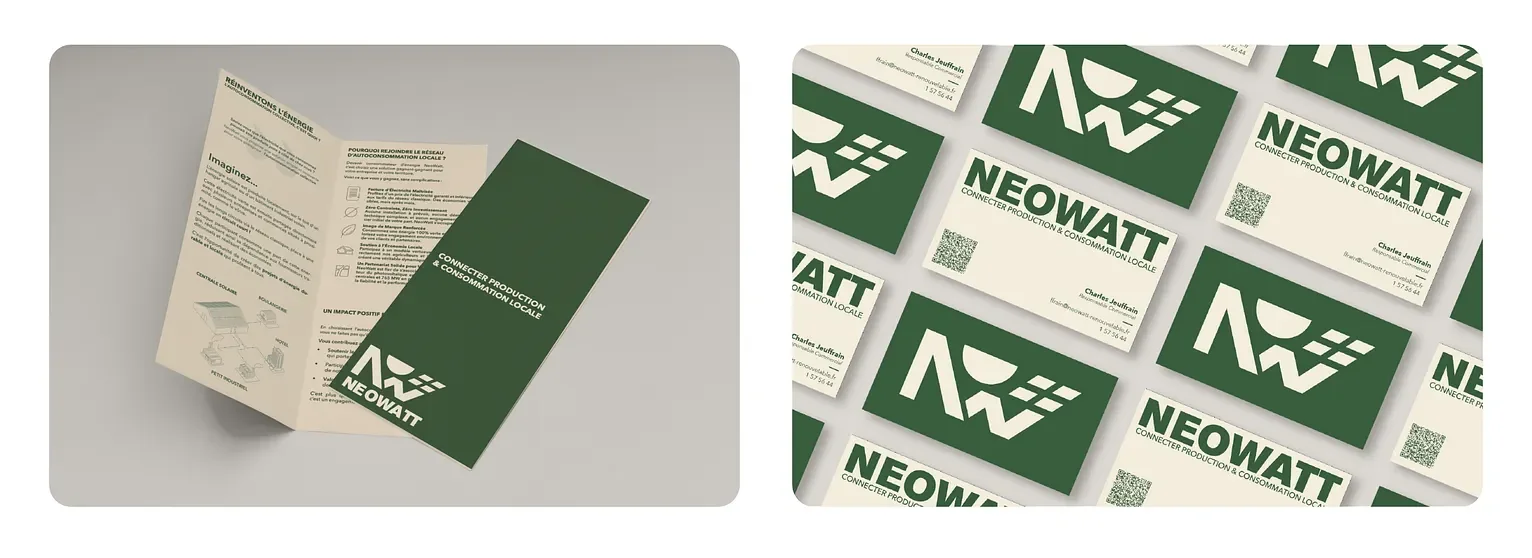
- Brand guidelines, stationery, leaflet, illustration
- Campaign
- Self-initiated concept, 2026
- Years
- 2025
- Status
- Delivered
Context
A model the law opened step by step.
Collective self-consumption has existed in French law since 2017. Since 2019 it can reach beyond a single building: a producer and its consumers may sit up to 2 km apart, and up to 20 km in rural areas since 2020, by derogation. The energy still travels on the local public grid. What changes is the distance: a short circuit between a producer and the businesses around it.
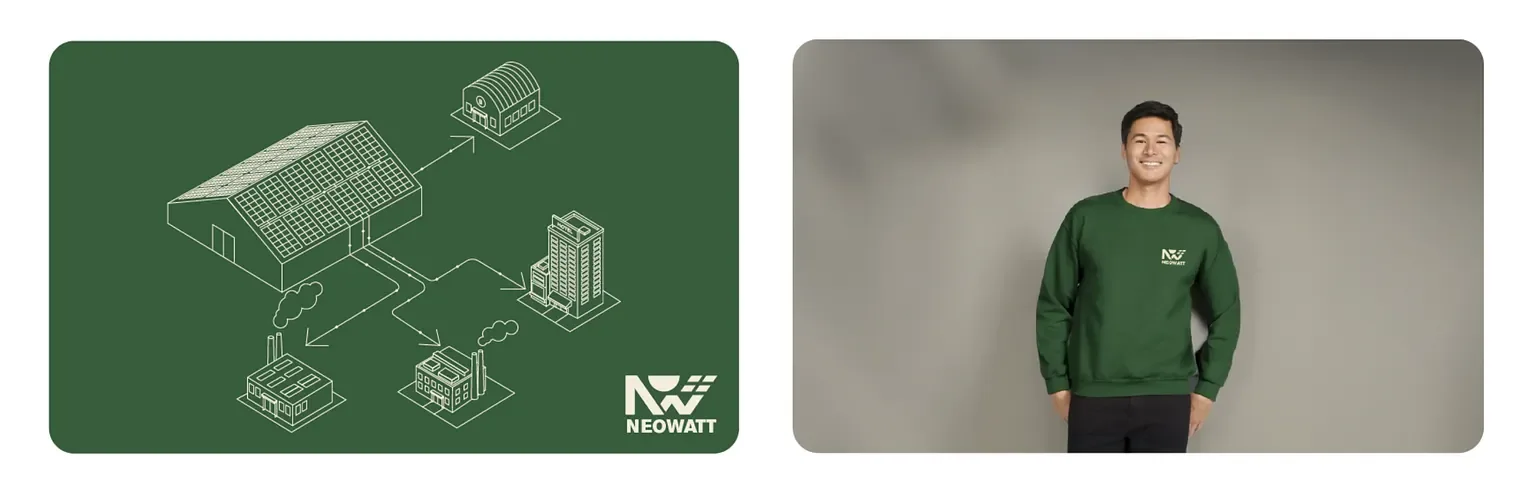
NEOWATT is built on that opening. The company works with farmers who have the surface for solar panels, and distributes the energy to hotels, shops and small industry nearby. A new kind of player needed a brand of its own.
The model
Three parties, one short circuit.
Identity
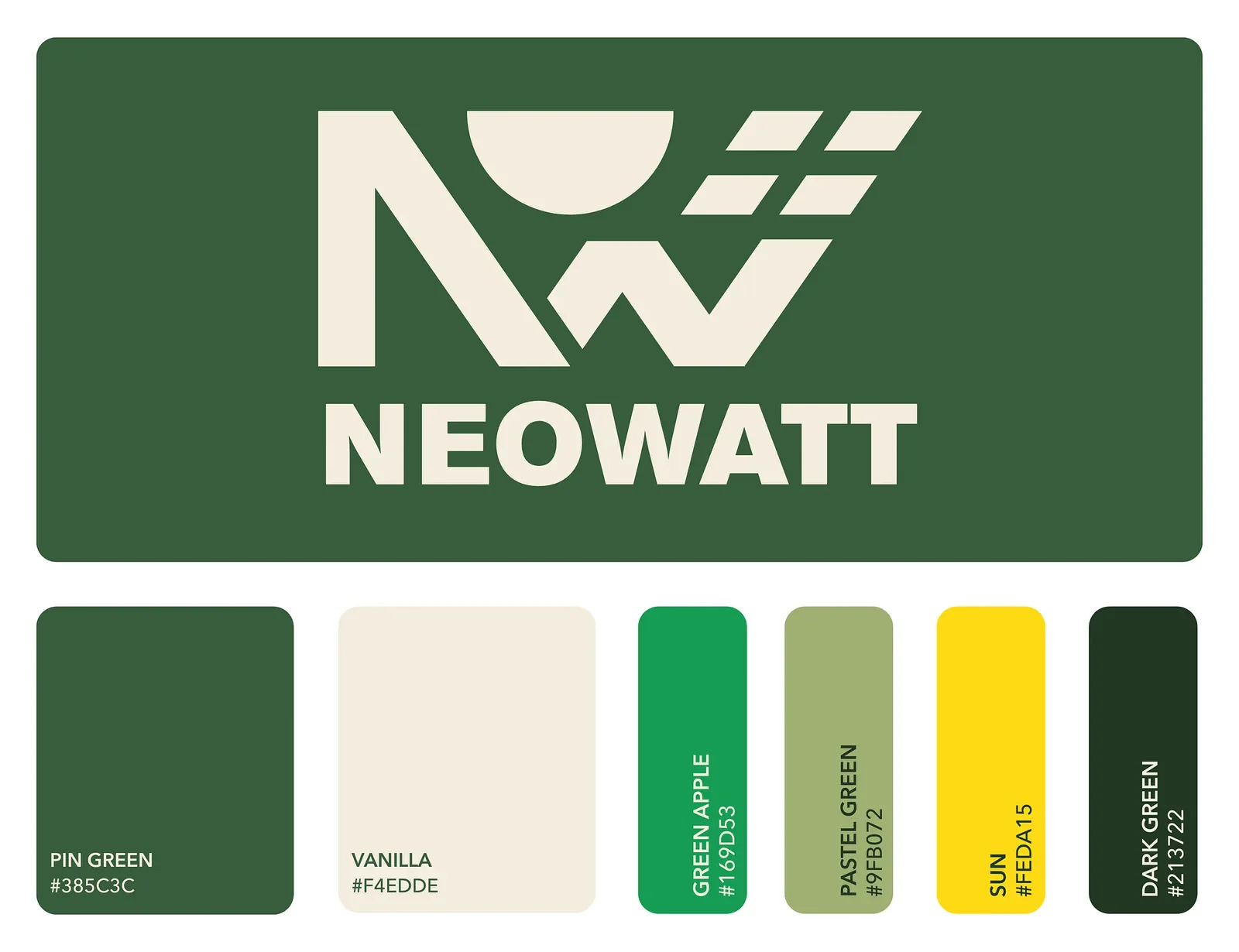
A mark, six colours, two typefaces.
On the road
The brand leaves the page.
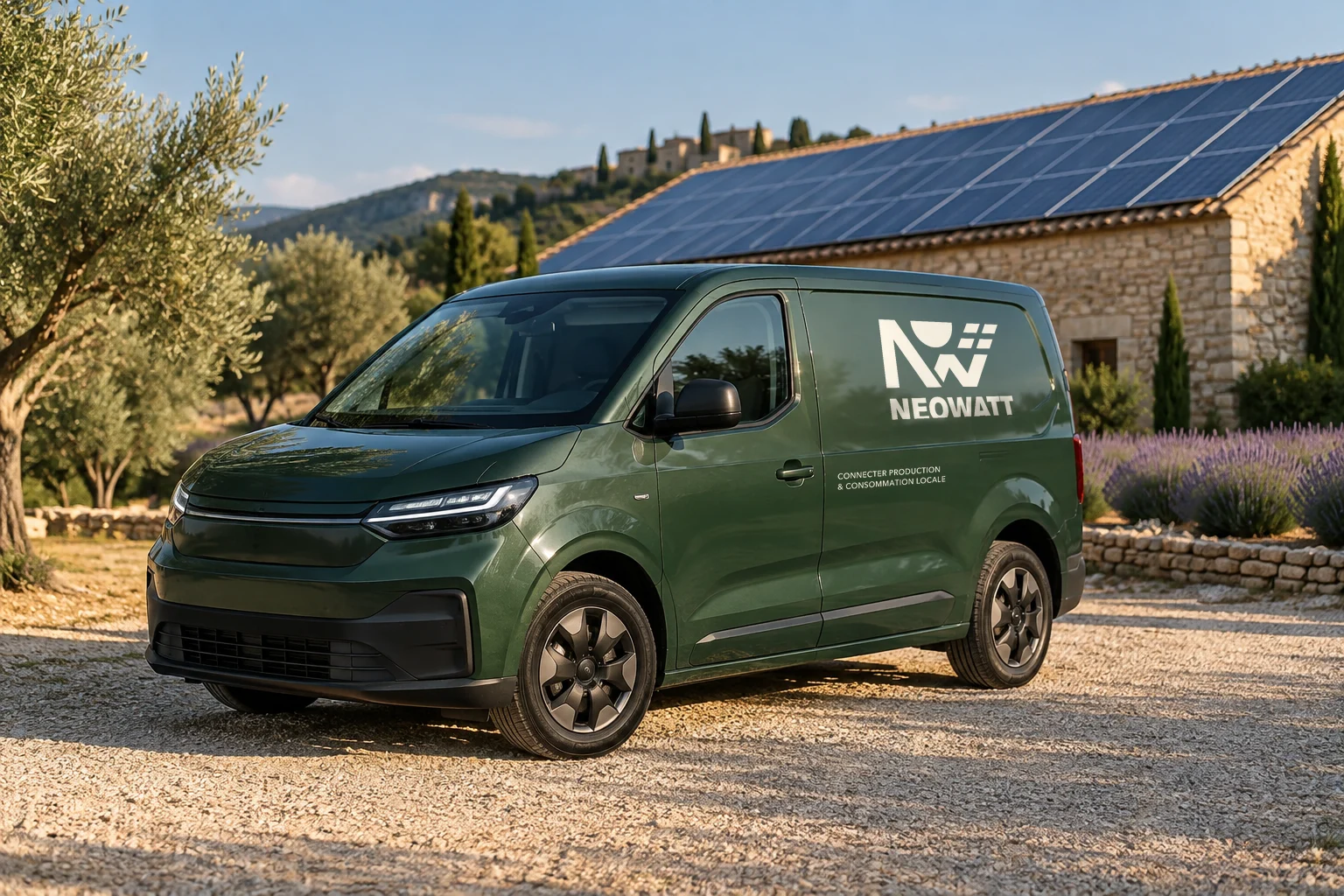
The service van carries the mark in vanilla on pine green, with the line Connecter production et consommation locale. It is the piece people in the area see first, parked in a farmyard or outside a shop.
Campaign
Electricity at farm-gate prices.
A baker buys flour from the mill down the road and eggs from the farm next door. Electricity is the one thing that comes from nowhere, at a price set on a market far away. Collective self-consumption makes it a local product like the rest: bought direct from a producer you know, at a price agreed between neighbours.
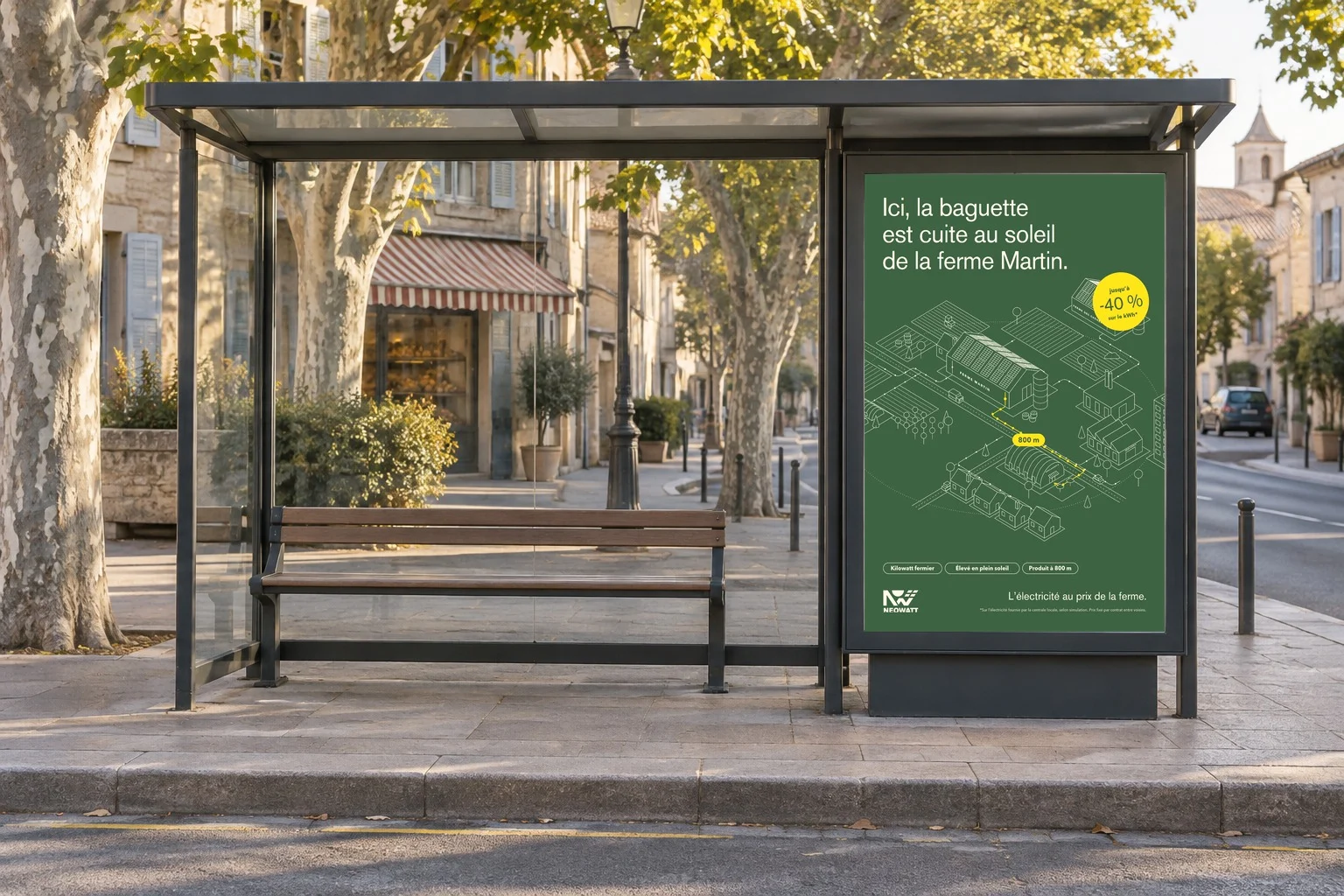
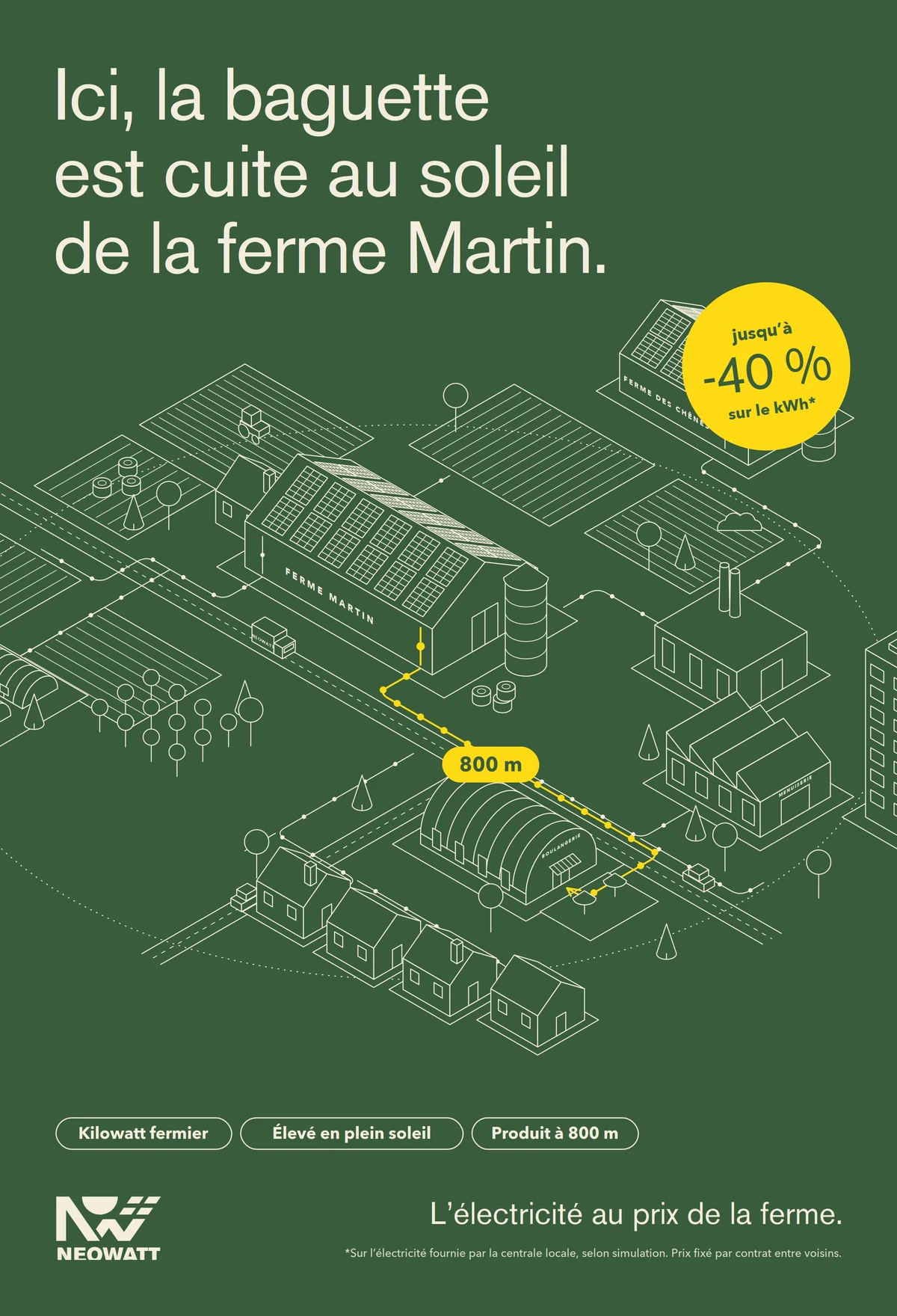
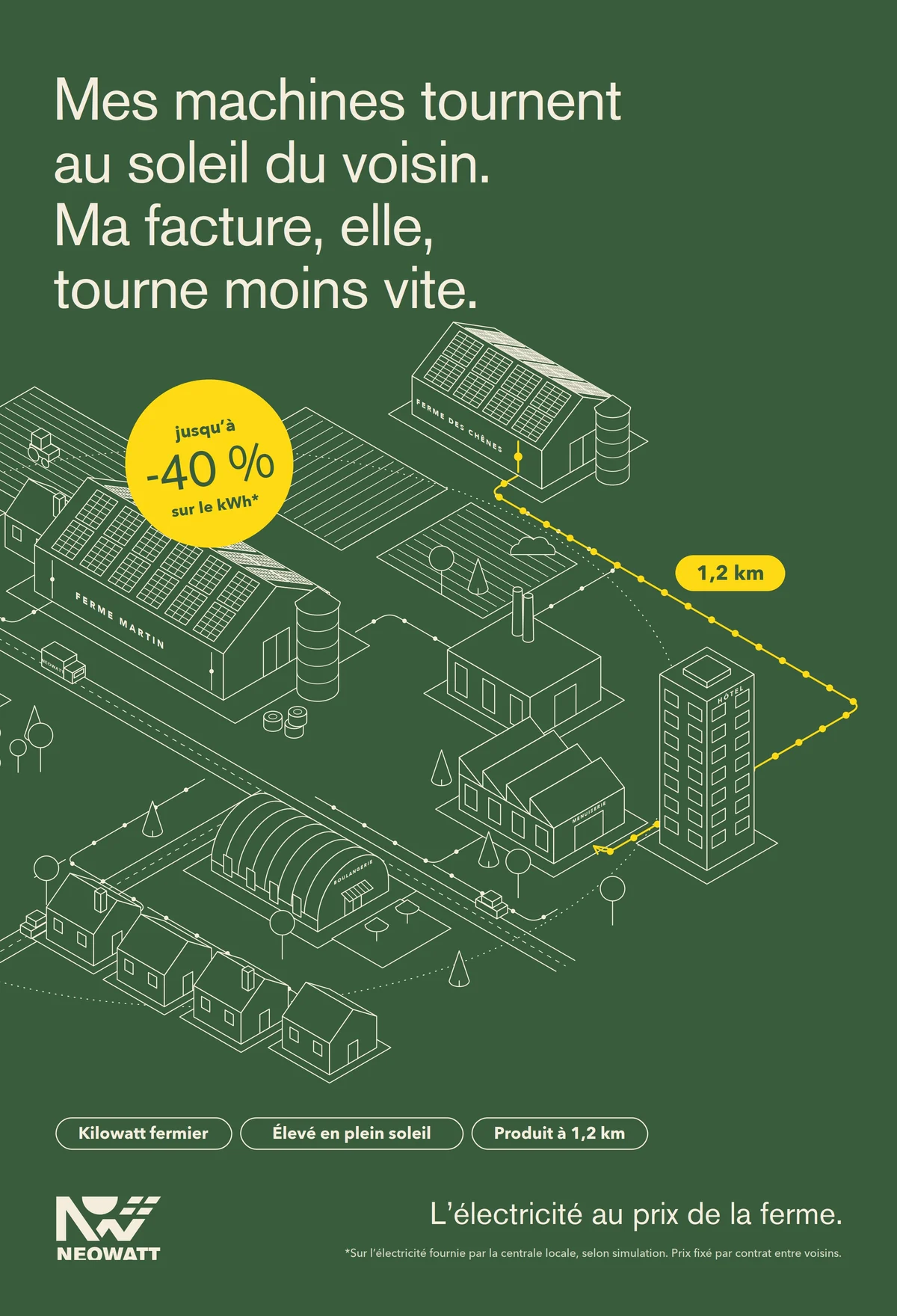
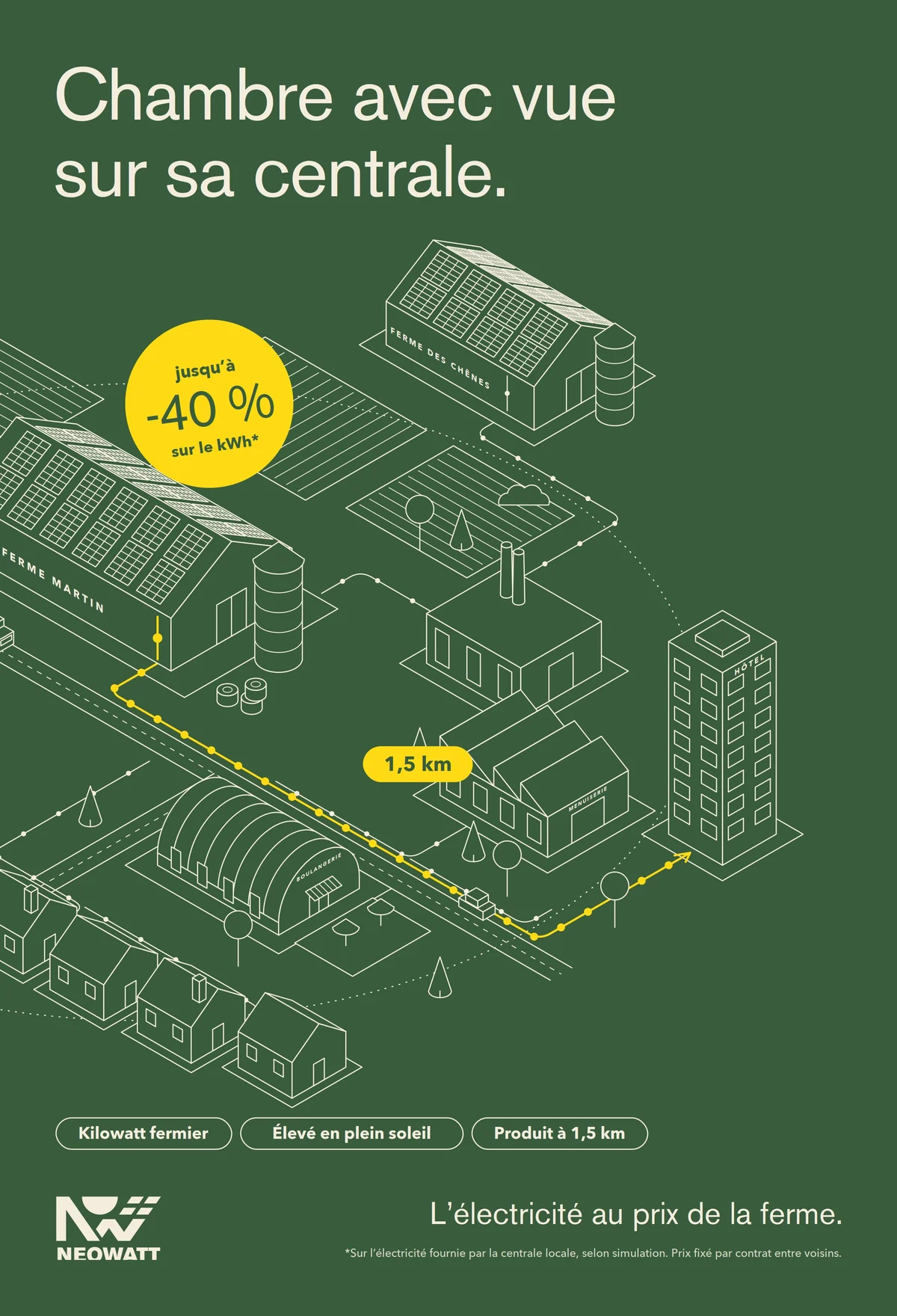
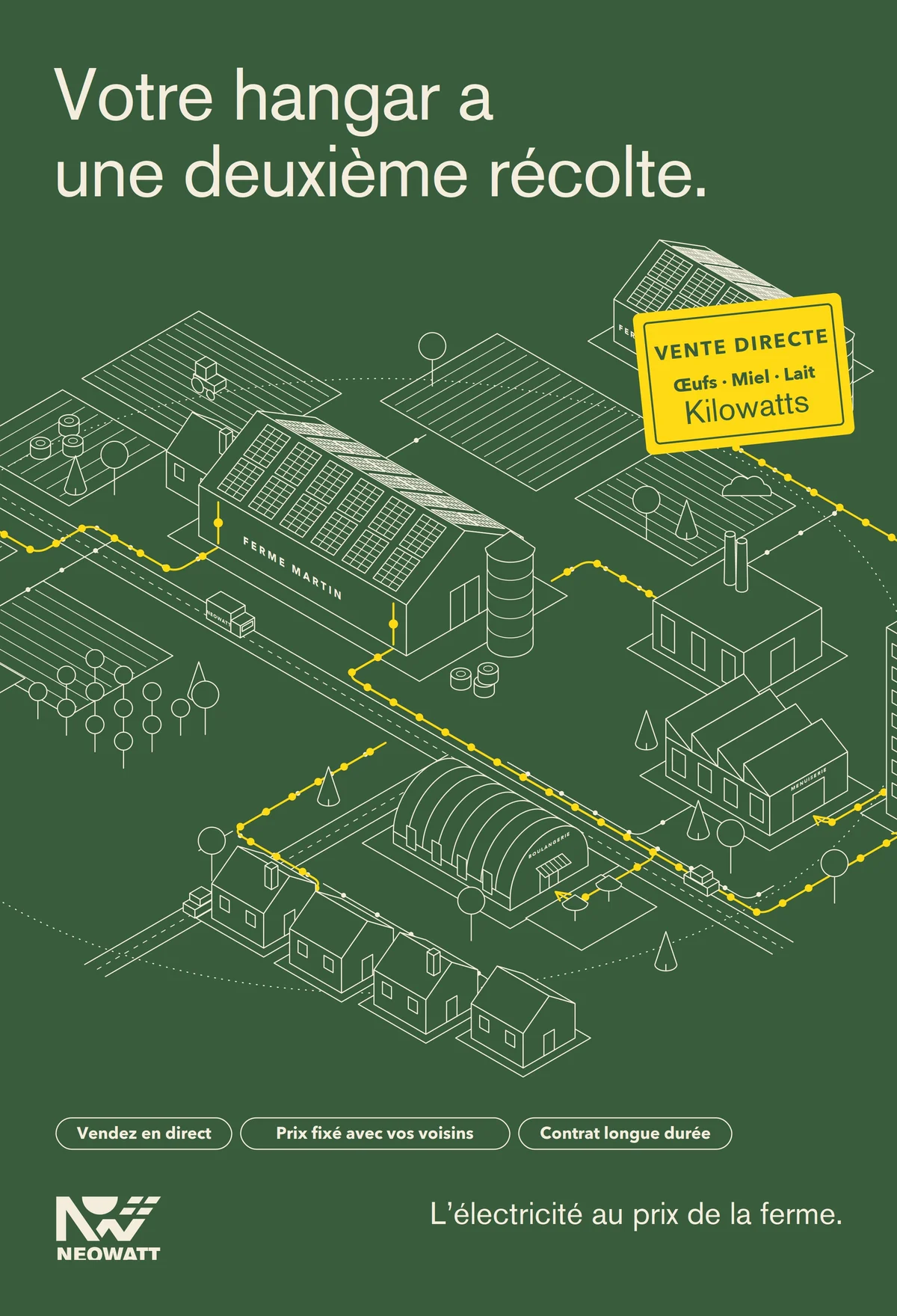
So the campaign borrows the codes of the farm-gate sign, the hand-painted board that reads eggs, honey, milk. The signature is L’électricité au prix de la ferme. Each poster names a pair, a farm and the business it supplies, and the illustration proves the claim: on a dense map of the territory, the route from one to the other is traced in sun yellow with its distance.
Two audiences, because the model needs both. Shops and small industry are told what they save; farmers are told their barn has a second harvest. The price claim is based on a published simulation: a local kWh around 12 cents against 22 at a supplier, which the posters round down to up to 40 % on the locally supplied share.
Four posters
One map, four routes.
Every poster crops the same isometric territory, drawn in vector in the line style of the brand illustration. Only the highlighted route, the distance and the line change.
In the street
From the bus shelter to the shop door.
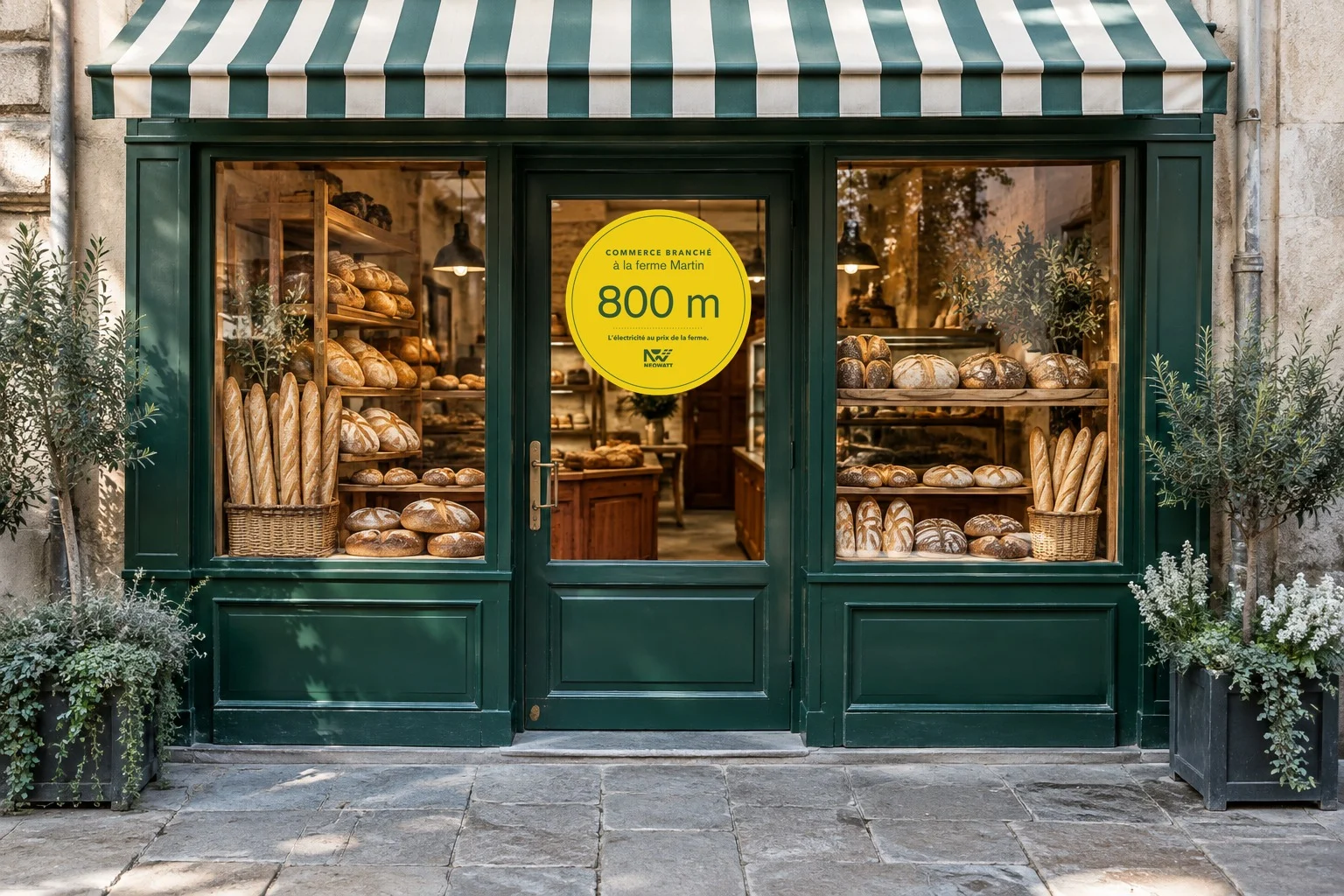
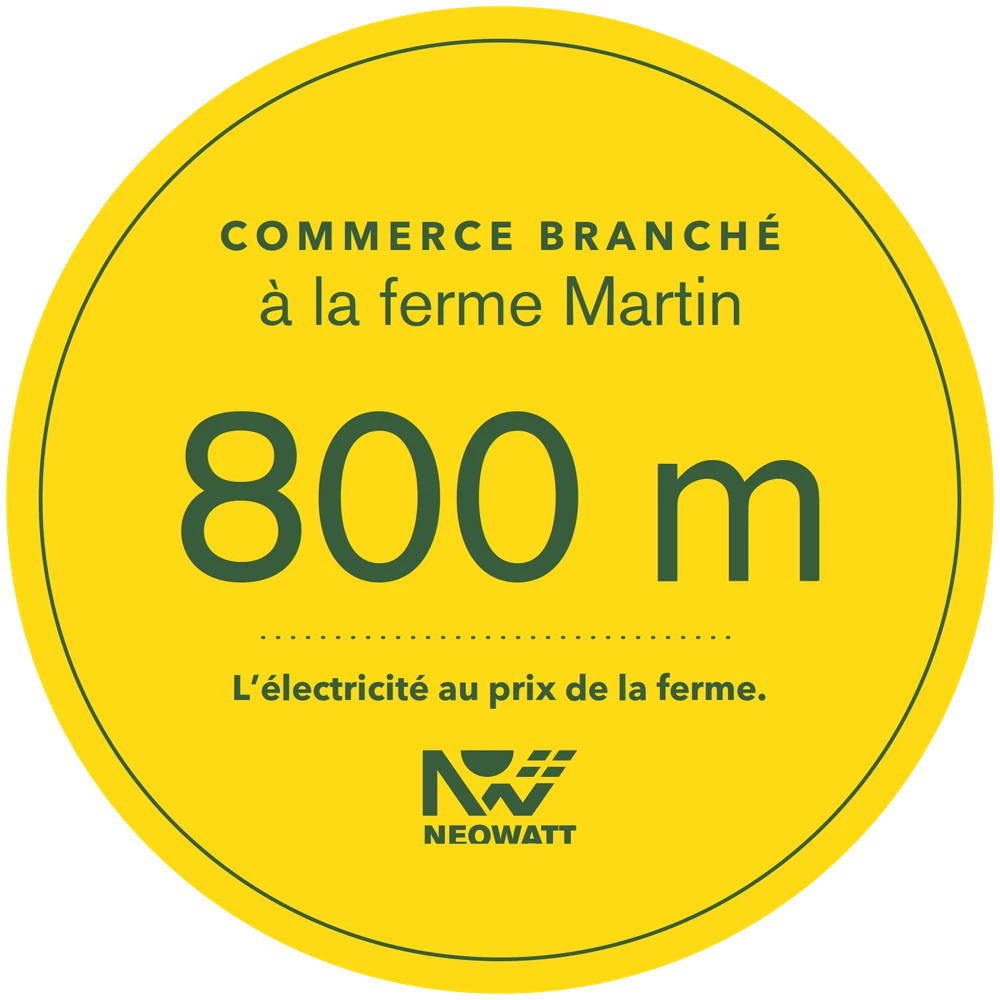
The poster runs at bus shelters in the villages concerned. Each business that joins gets a window sticker with its own farm and distance, so the network shows itself street by street.