● Case study · Defence
VANTAGE
One picture of the ground, from the platoon to the brigade.
A battle management system (BMS) for ground forces. It fuses every source on the battlefield into one picture where each piece of information says where it comes from, then gives every echelon its own screen. I designed the brand, the tablet, the command post laptop, the brigade wall, the compute node they run on, and five animated scenarios built in code.
- Client
- Self-initiated
- Role
- Product design, brand, industrial design concept, front-end build
- Surfaces
- Section tablet, company laptop, brigade wall, VANTAGE Node
- Theatres
- NORTH-3, SAND-7, BALTIC-4, ARGONNE-1
- Stack
- HTML, Canvas, SVG, WebAudio, generated terrain
- Years
- 2026
- Status
- Concept, designed and coded
What it is
Fifty sources. One picture.
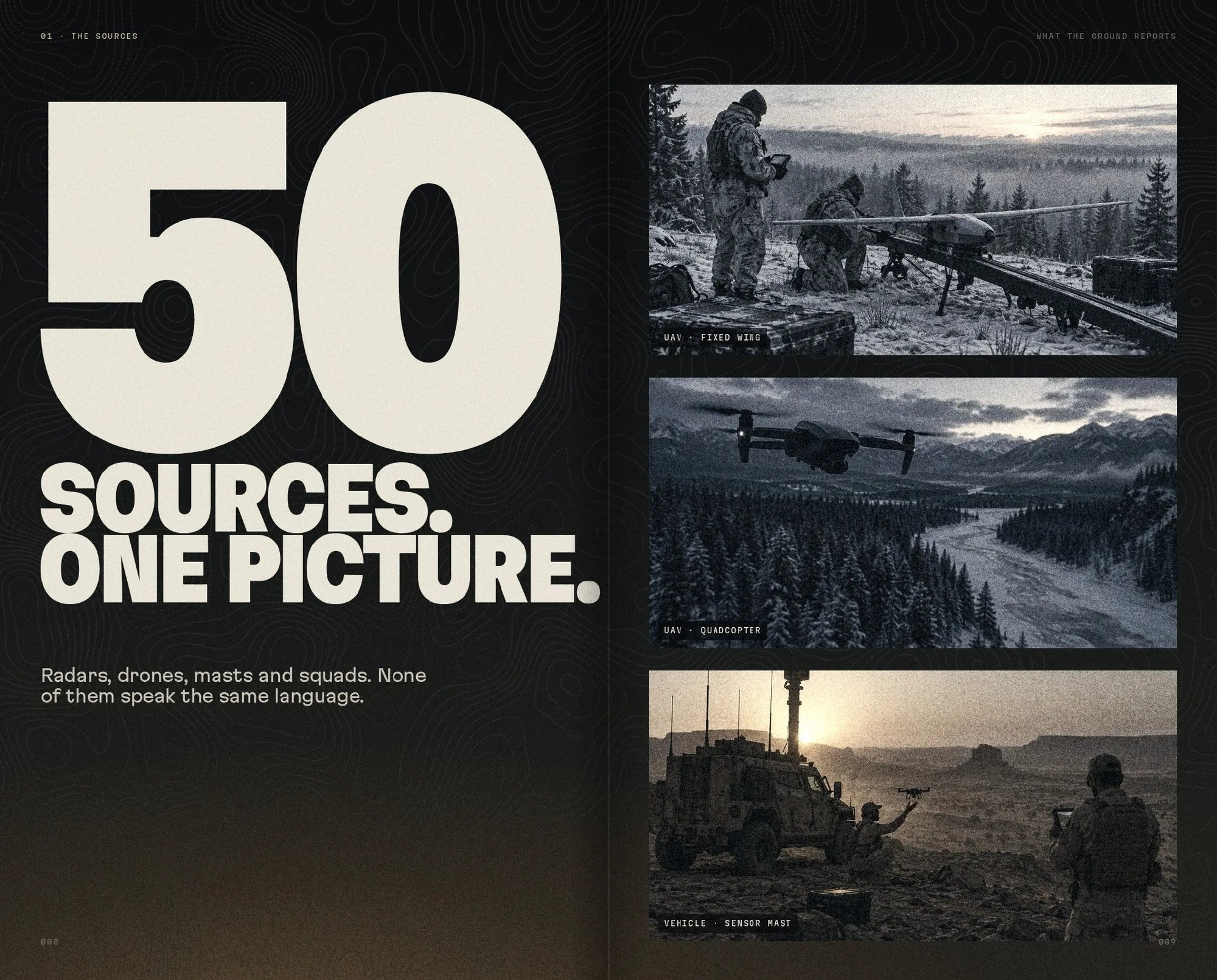
VANTAGE is a battle management system, a BMS: the software that gives every echelon, from the platoon to the brigade, the same tactical picture, and carries orders down and acknowledgements up. A command post hears from radars, drones, acoustic sensors, vehicles and squads. Each one reports with its own delay, its own format and its own reliability. VANTAGE fuses them into one picture of the ground, and every symbol on that picture says where it comes from and how old it is.
The same picture then goes to every echelon, shaped for the person who reads it: the section leader on a rugged tablet, the company commander on a laptop in the command post, the brigade staff on a wall of screens. VANTAGE is a fictional product. The units, places and data are invented; the doctrine, the symbology and the constraints are real.
Where VANTAGE sits
- 01Battle management systems
- 02Data and decision platforms
- 03Recce-strike
- 04Autonomy and sensor networks
- 05What VANTAGE adds to its family
What VANTAGE does not do
- 01No targeting
- 02No decision on its own
- 03No false certainty
- 04No dependency on the cloud
- 05No national fork
In numbers
Brand identity
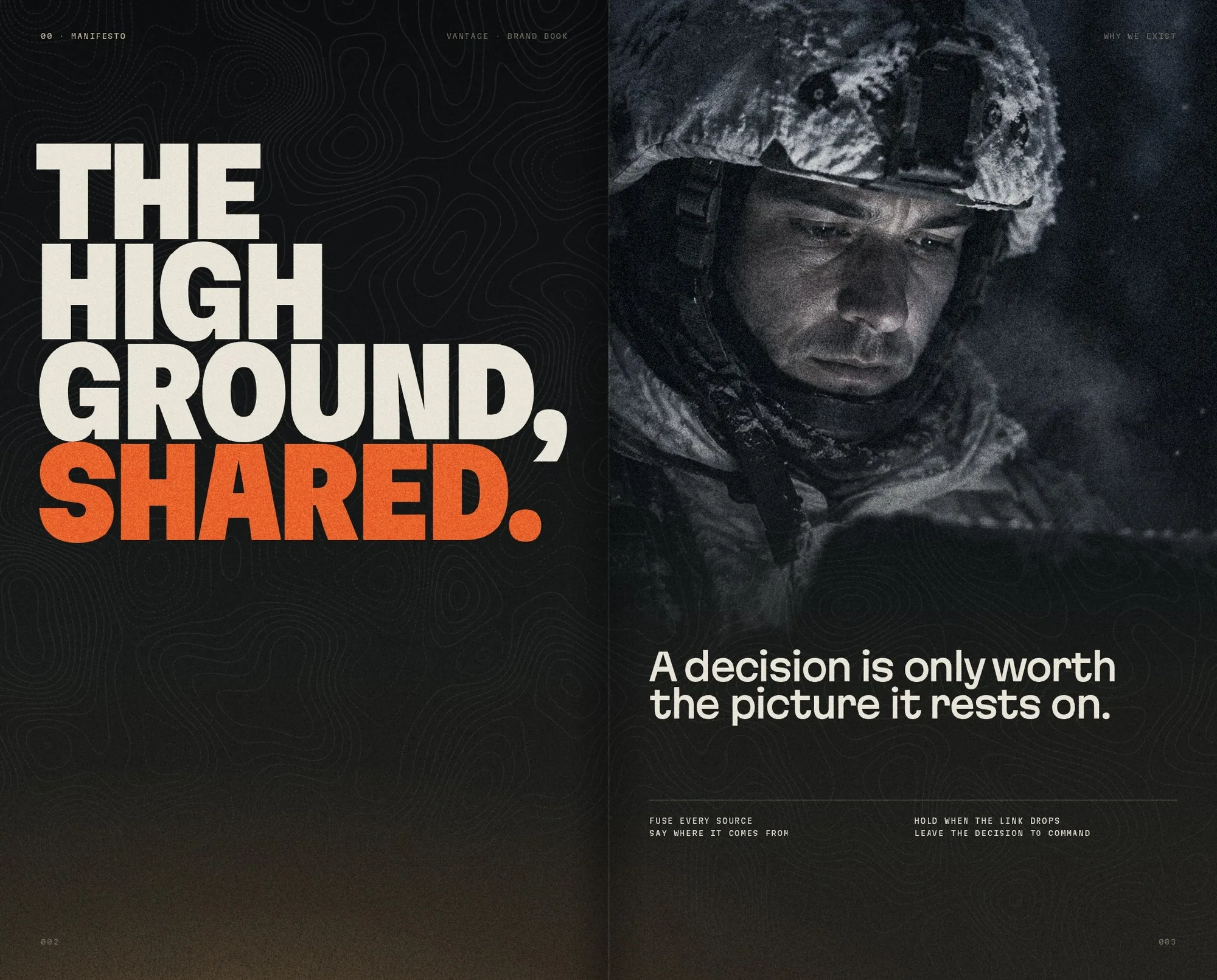
The high ground, shared.
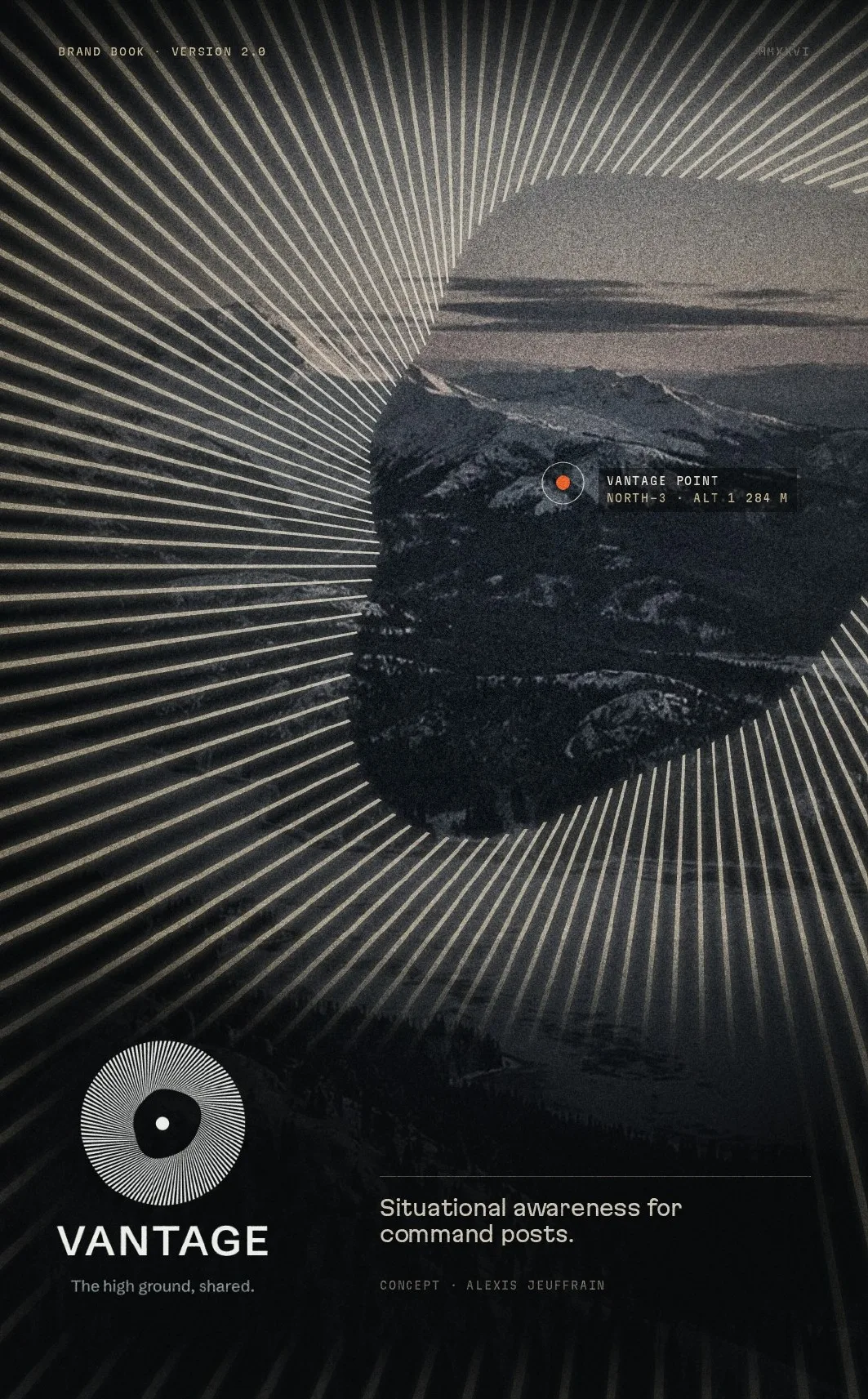
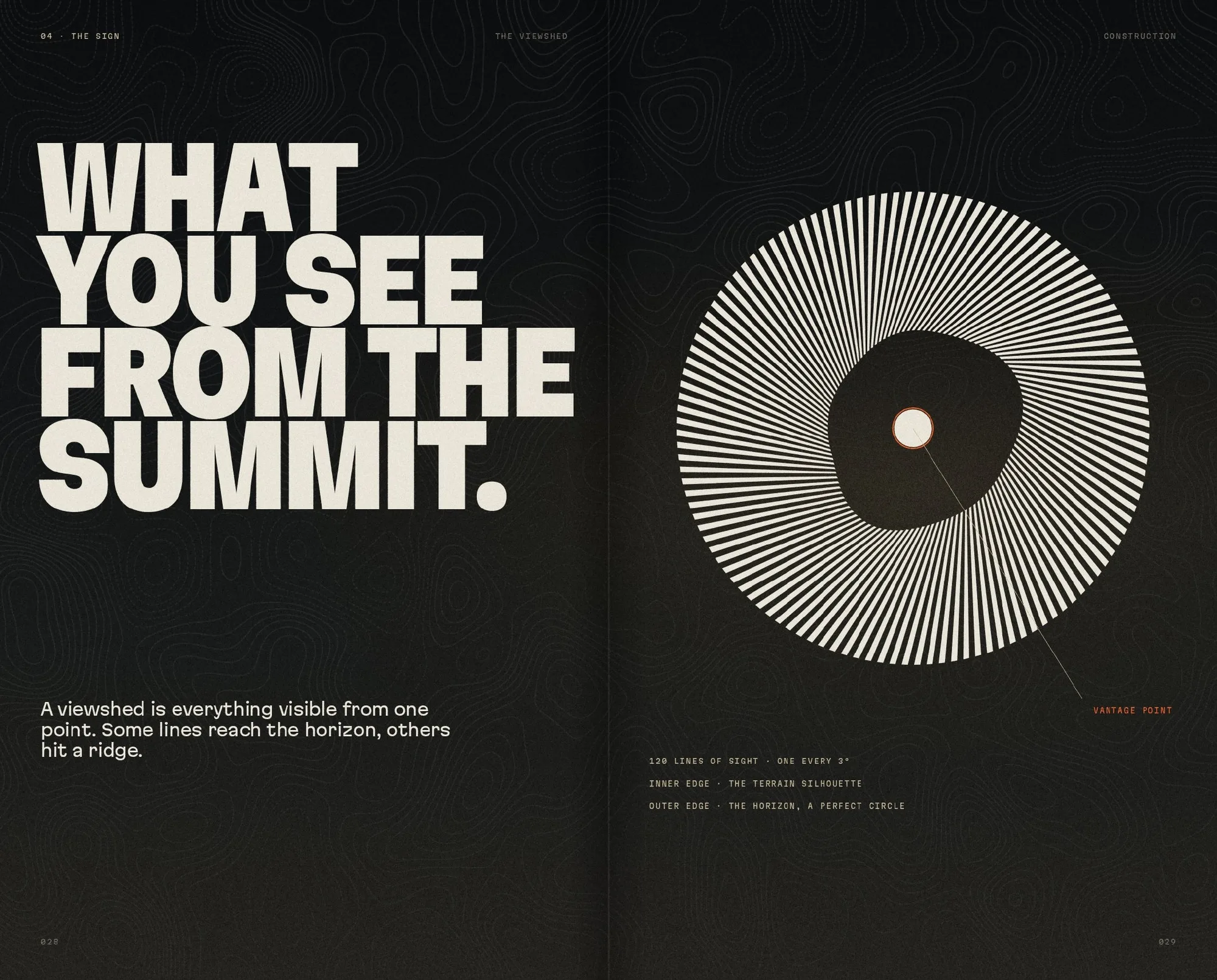
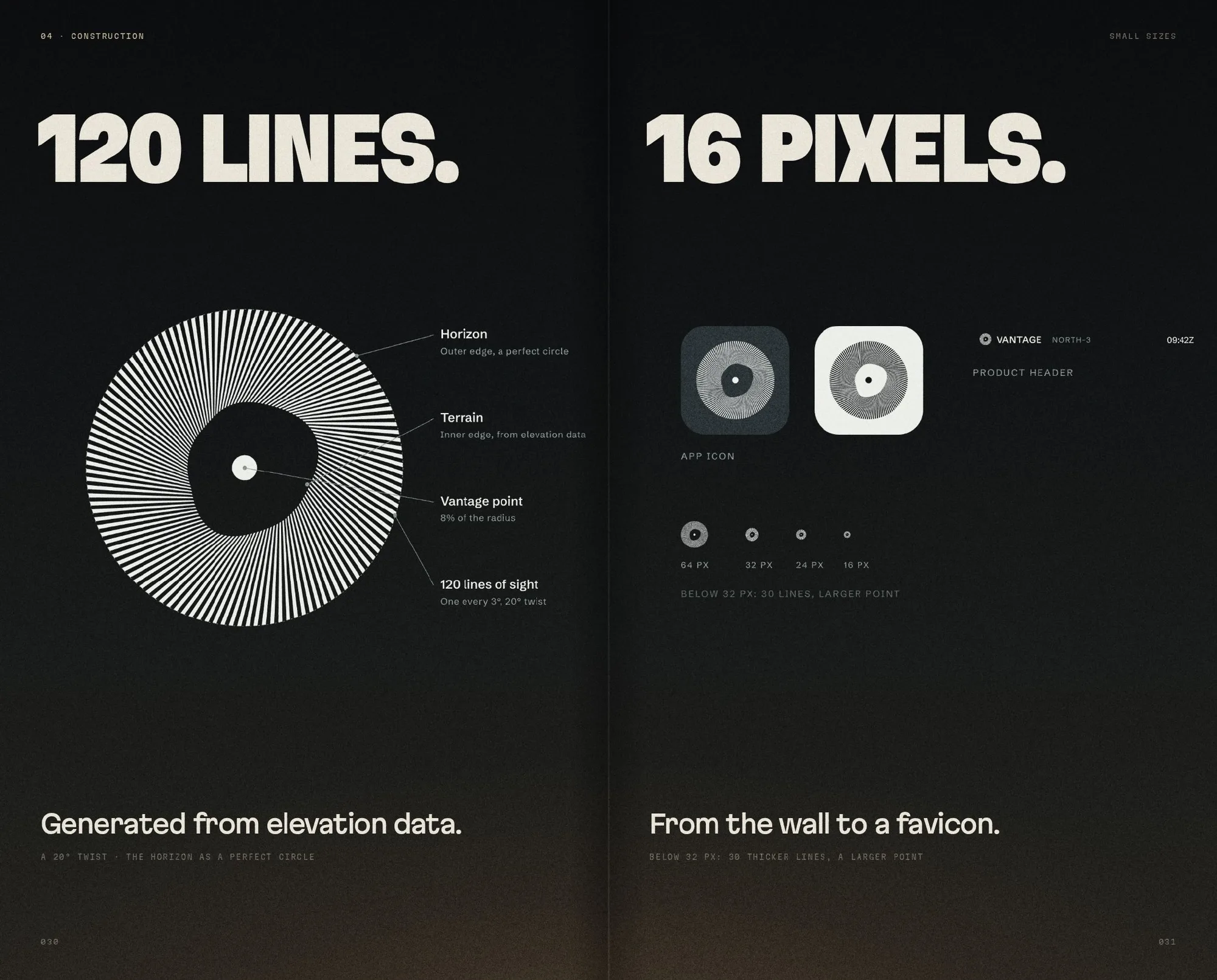
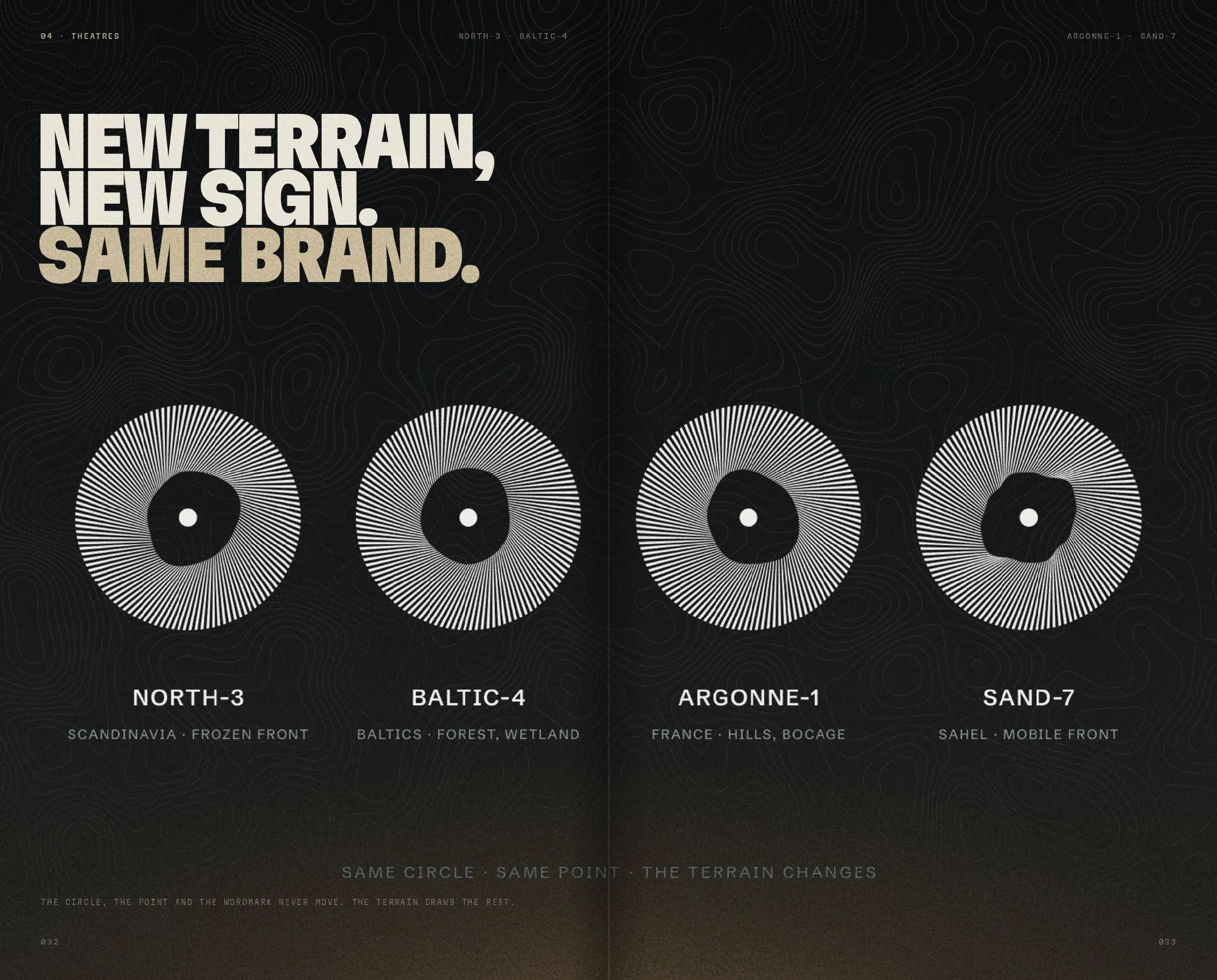
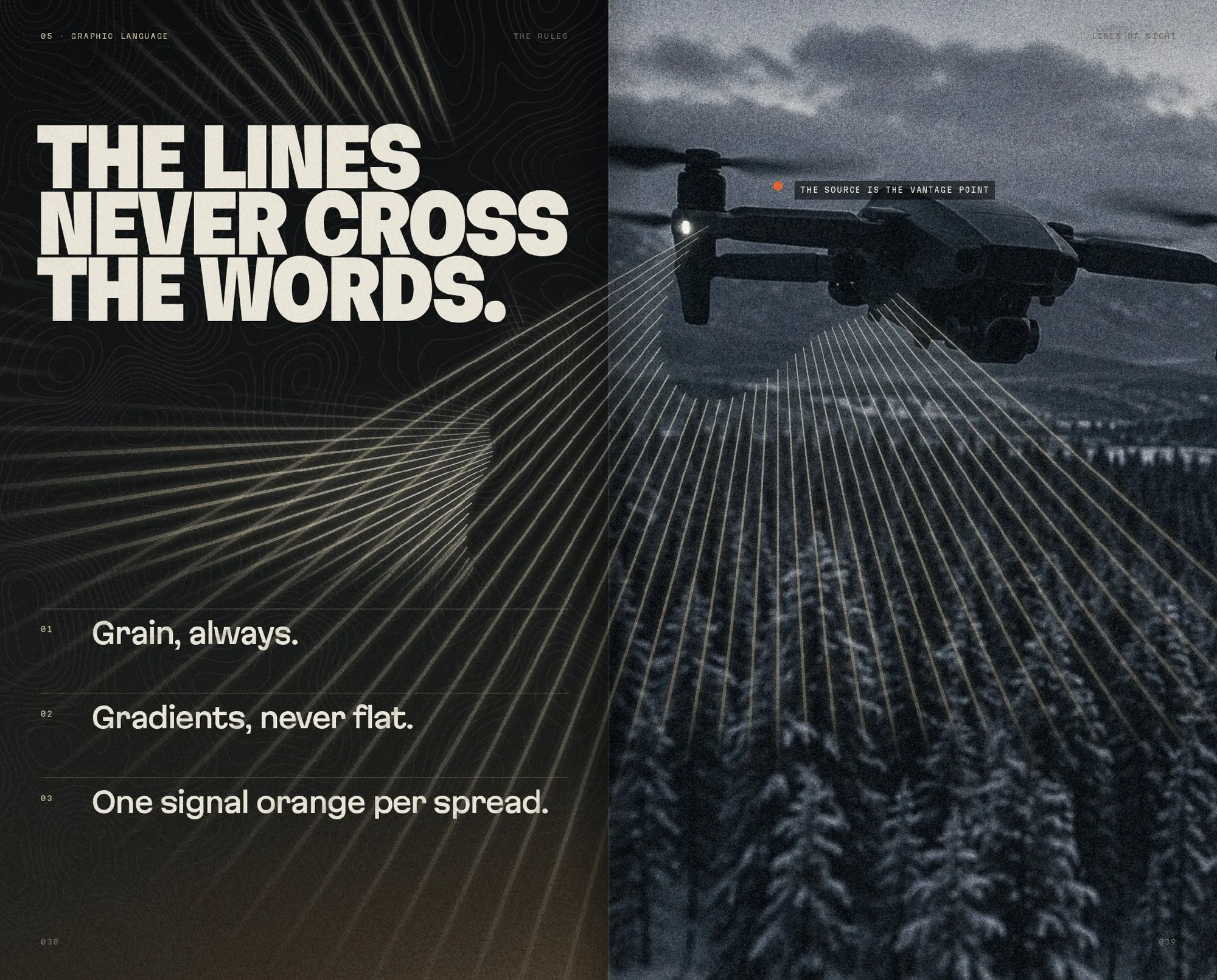
The sign is a viewshed: everything visible from one point. 120 lines of sight, one every 3 degrees, cut by the terrain in each direction and closed by the horizon. Because it is generated from elevation data, each theatre gets its own variant; the circle, the point and the wordmark never move.
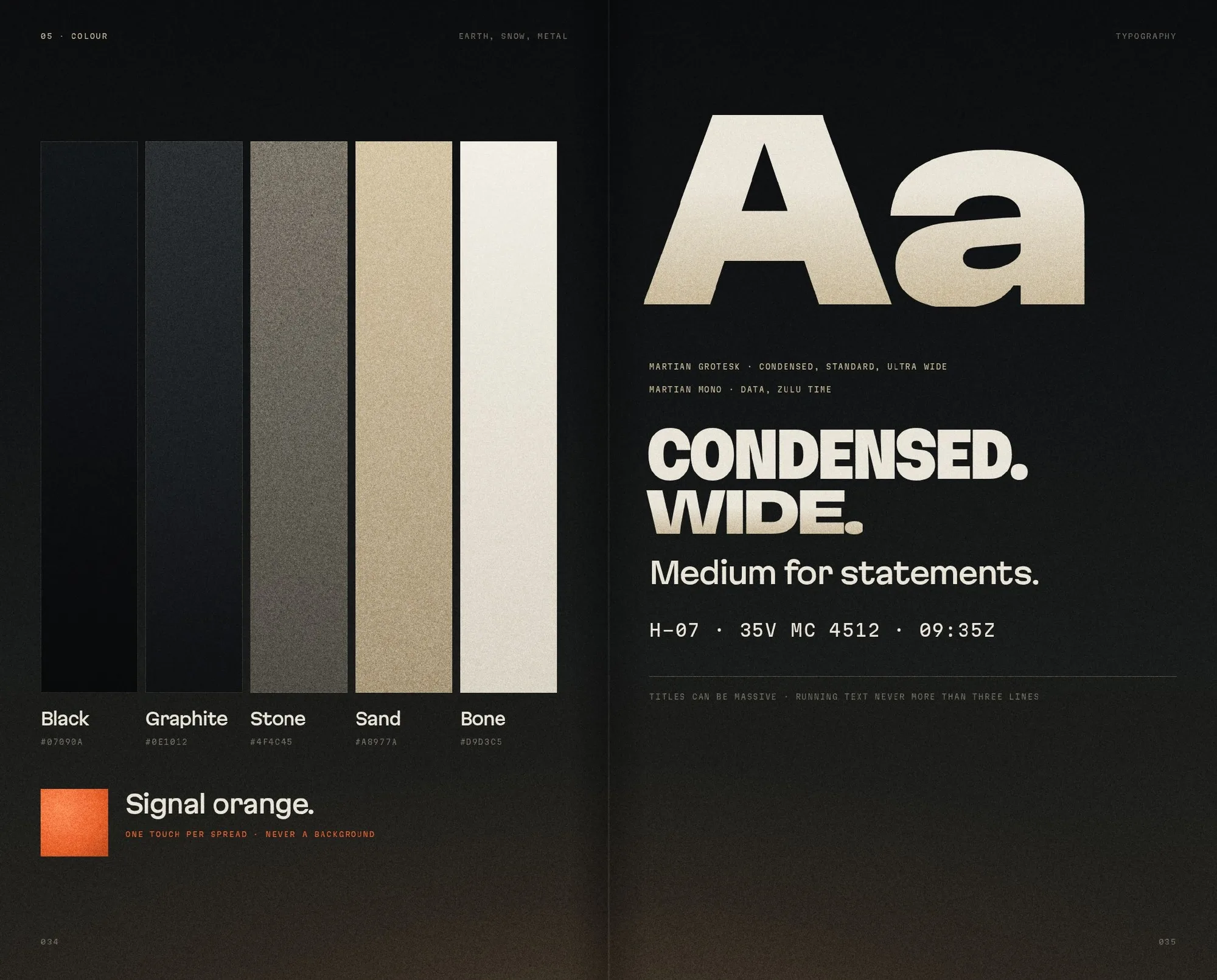
Earth, snow and metal carry the brand: black, graphite, stone, sand, bone. One signal orange per spread, never a background. Grain always, gradients never flat, and the lines of sight never cross the words.
Brand universe
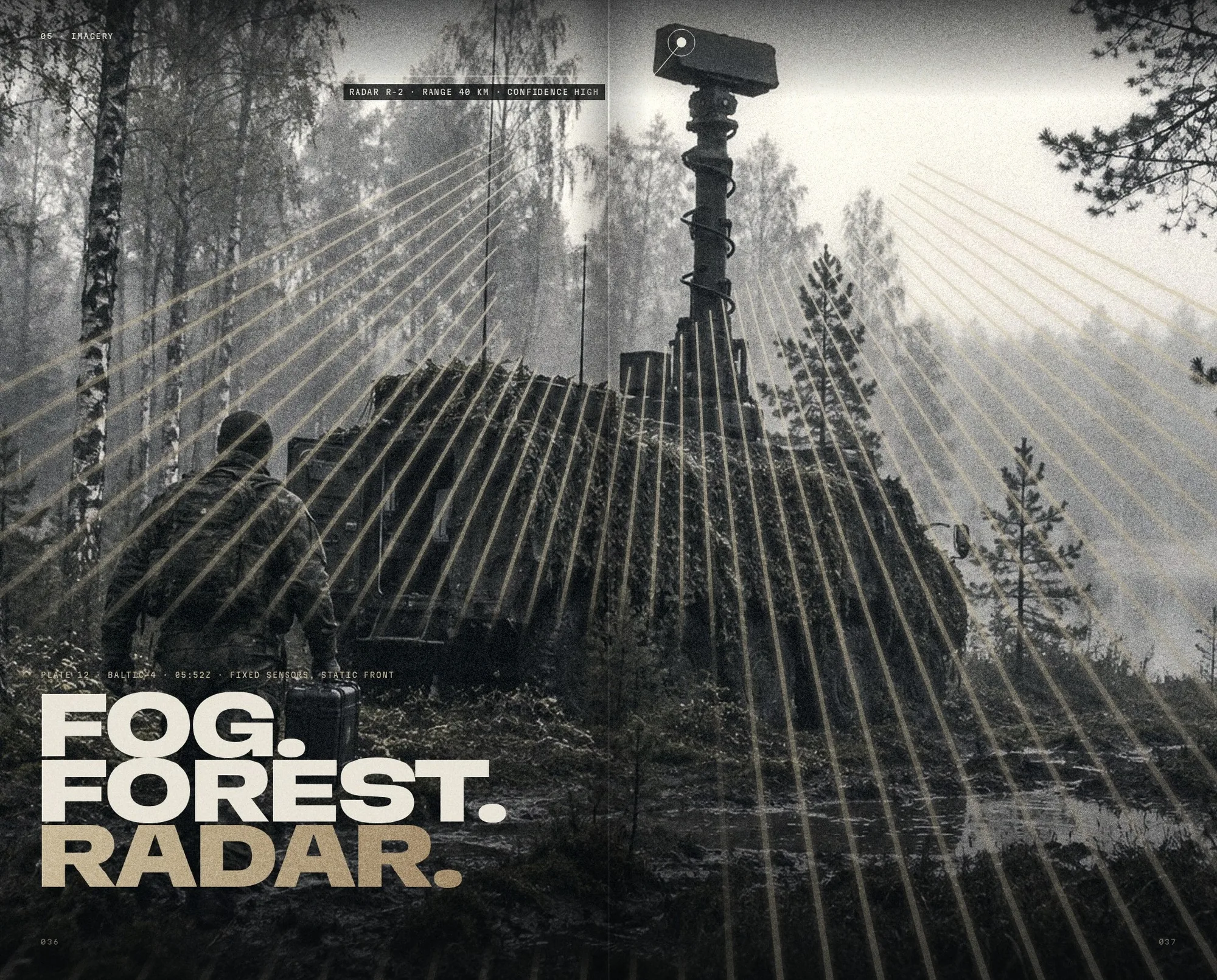
Show the sources. Real light, no insignia.
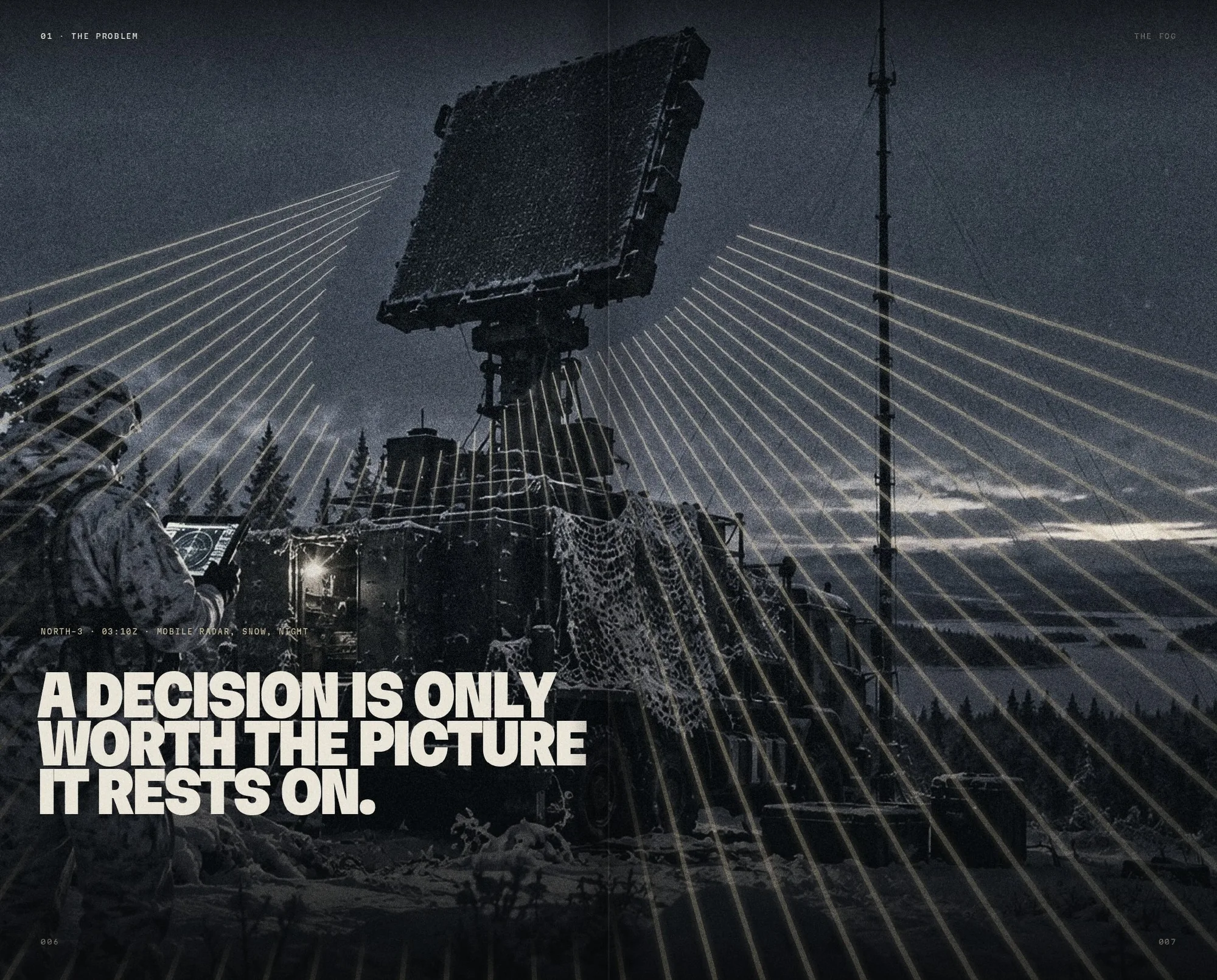
The imagery shows what feeds the picture and who reads it: radars, masts, drones, vehicles, tablets, and the people who use them. Each source is its own vantage point, and its lines of sight are drawn over the photograph. Restraint over spectacle.
The missions
Five missions, one screen at a time.
The section, on a tablet
What deserves to interrupt me now.
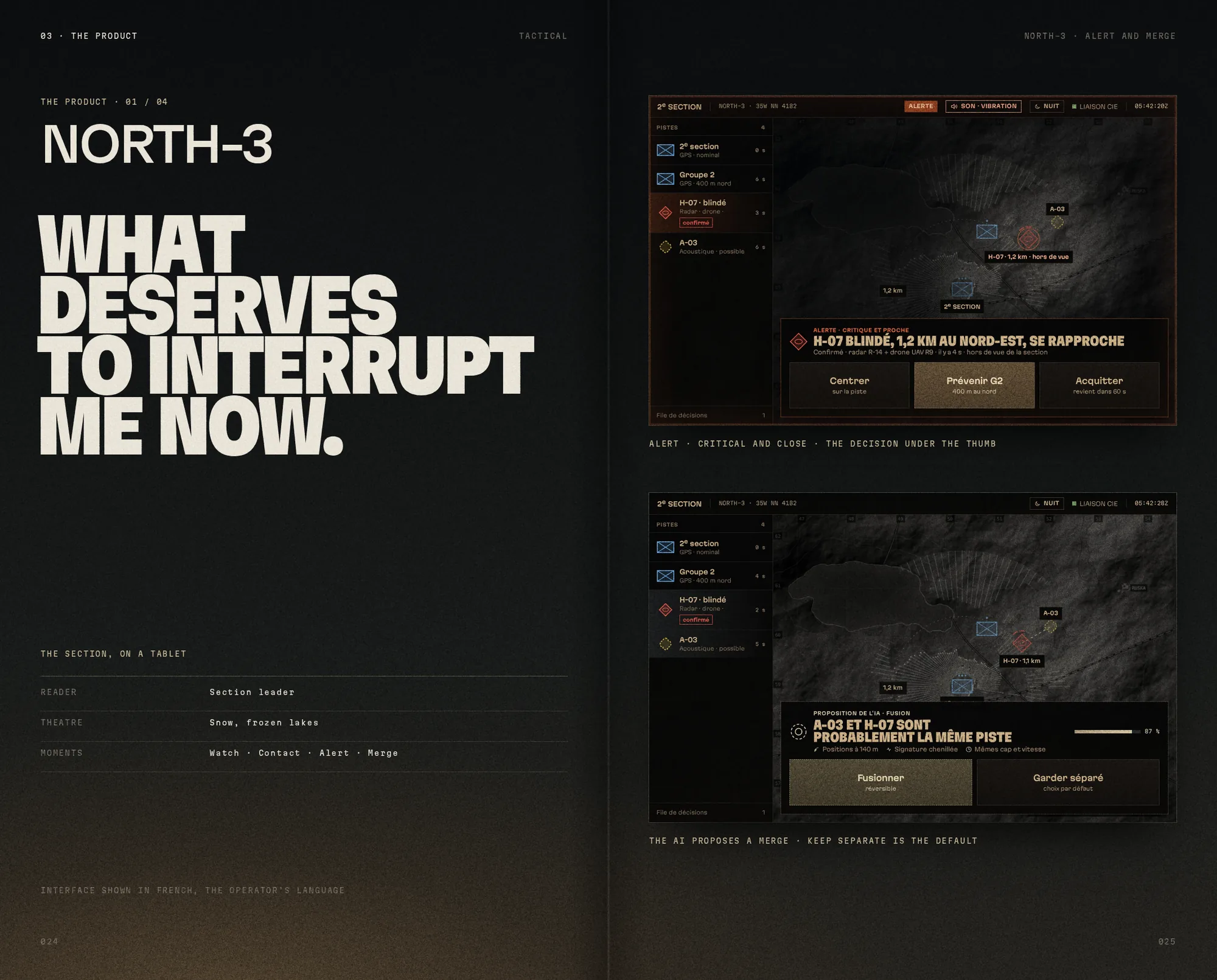
Before dawn, in night mode: a dimmed, warm screen with no light surface that would give the position away. The section's lines of sight start from where it stands and stop where the relief cuts them. The ground it cannot see stays empty, and that is where a radar track appears.
The track becomes an enemy armoured vehicle 1.3 km away, still out of the section's sight. One arc segment per independent source sits above the symbol. Everything else dims, the tablet vibrates, and the decision rises under the thumb: three targets of 112 px. Then the AI proposes, in dashed sand and with its reasons, to merge an acoustic track with it. The section leader decides.
When the link drops
The tablet keeps working on its own.
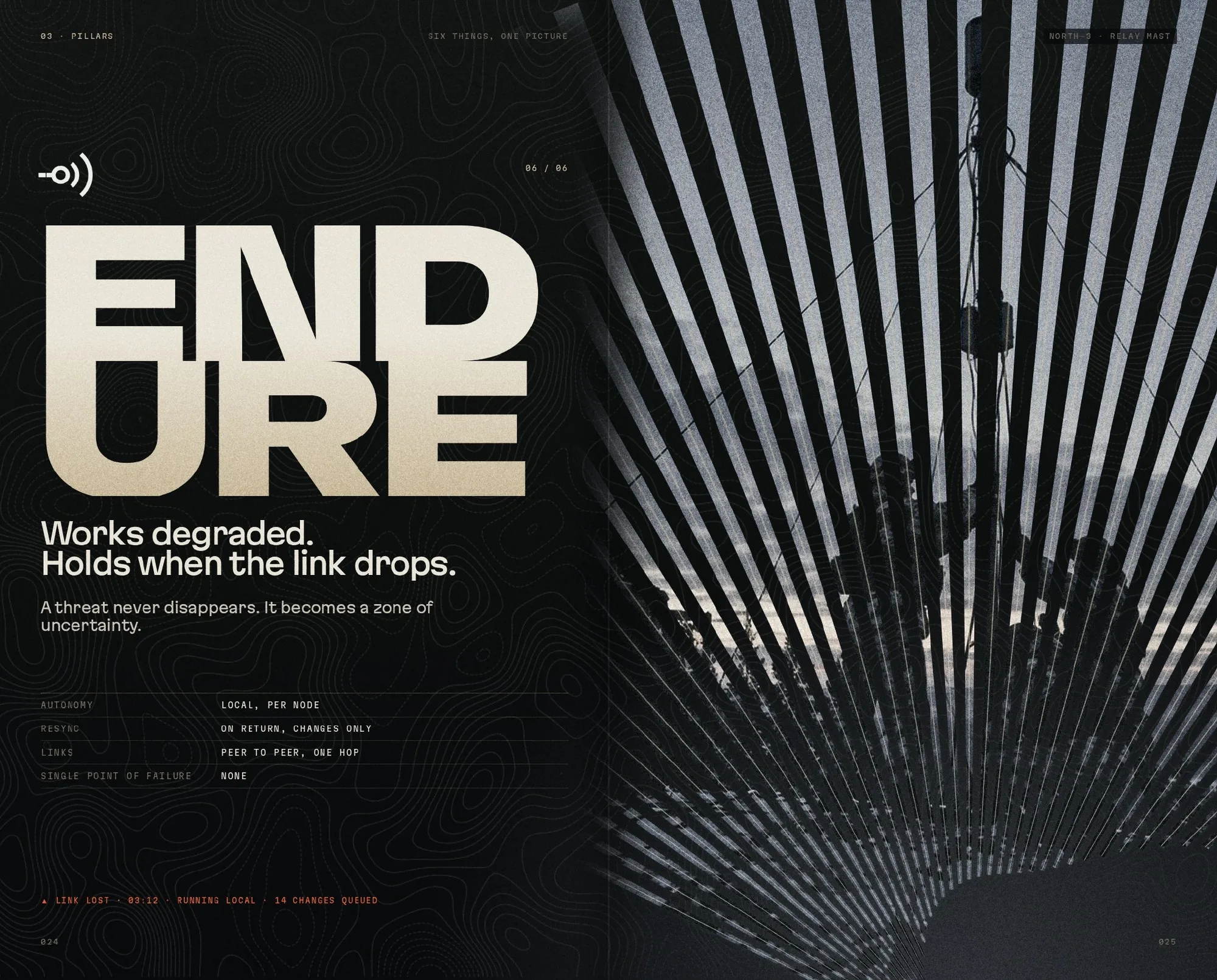
The convoy loses its link with the company. The banner says it plainly, with a timer, and lists what still works: GPS, the local map, the section radio. Enemy tracks age in front of you and turn into zones of uncertainty that grow with time.
When the route crosses one of those zones, VANTAGE does not decide for the chief. It shows the risk and offers three options. The detour is drawn in the order colour, solid line and arrow. The link comes back, the waiting messages leave.
The company, on a rugged laptop
Cyber defence in plain words.
A drone track jumps 1.8 km in two seconds, two sections lose their link, a friendly position appears 3.2 km from where its radio says it is. Each anomaly lands in a log, and the system never moves a friendly unit on a doubtful signal.
From the lost links, VANTAGE deduces where the jammer stands, then computes its lines of sight on the relief. The ground exposed to it shows in red: two sections are inside, the other two are under cover. A doubtful signal becomes something the captain can act on.
The AI brings the three anomalies together: same sector, eleven seconds apart. It proposes a pattern, GNSS spoofing and jamming ahead of an action, with its confidence. The captain judges and sends it up to brigade.
The brigade, on the wall
One piece of data, two grammars.
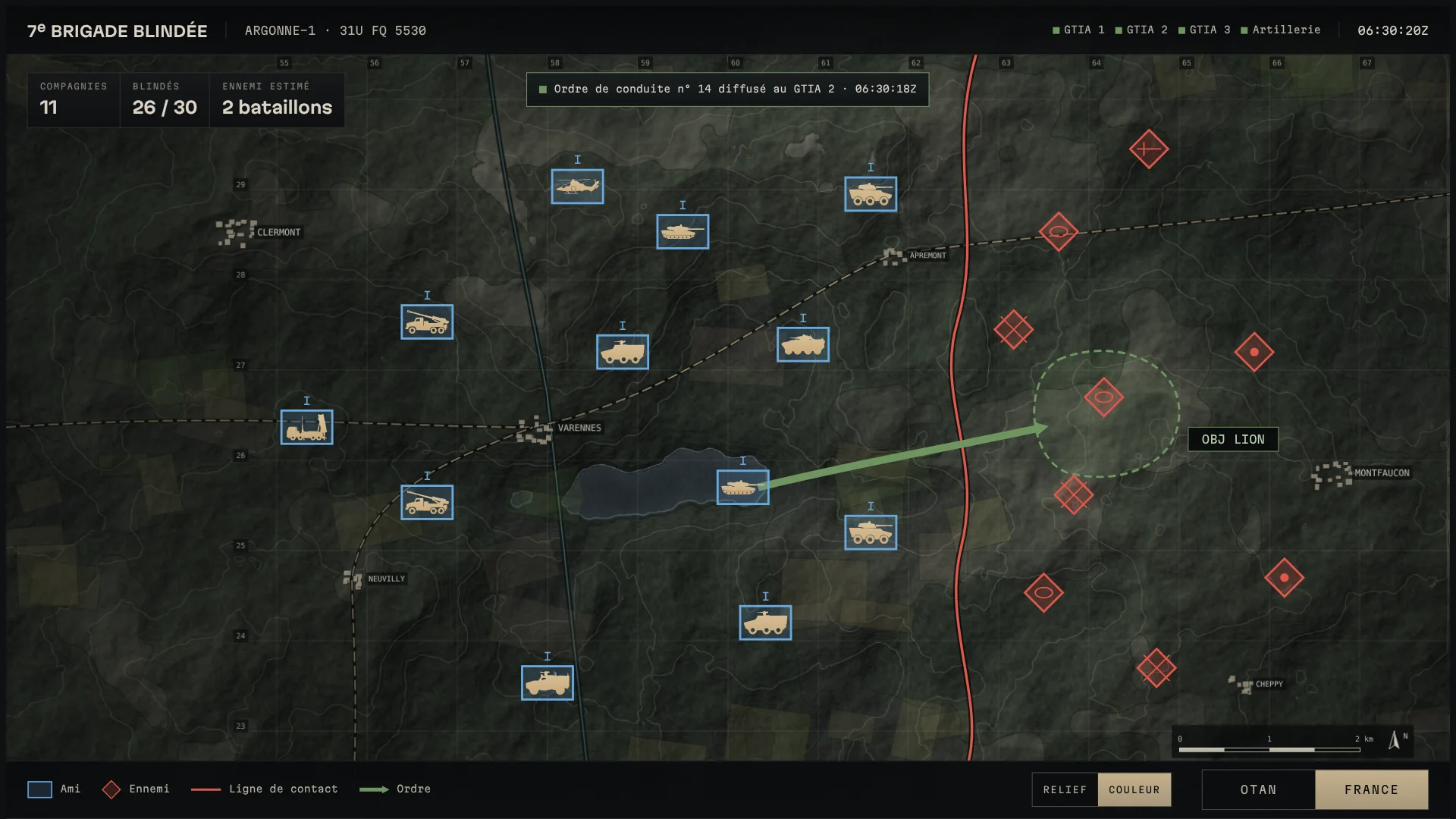
The brigade wall reads the whole manoeuvre in NATO symbology, the common language of allied forces. One switch and the French staff reads the exact vehicle under each friendly symbol, as a text field: Leclerc, VBCI, Griffon, Caesar. The symbol itself never changes, the silhouette only appears in the detail card, and the enemy stays generic until intelligence confirms its type. Above each enemy track, one segment per source; older information fades.
The chief of staff draws the order: axis of the second battlegroup towards objective LION. At the same moment, the allied liaison officer reads the same situation in NATO mode on his own screen.
The thread
An order goes down, an acknowledgement comes back up.
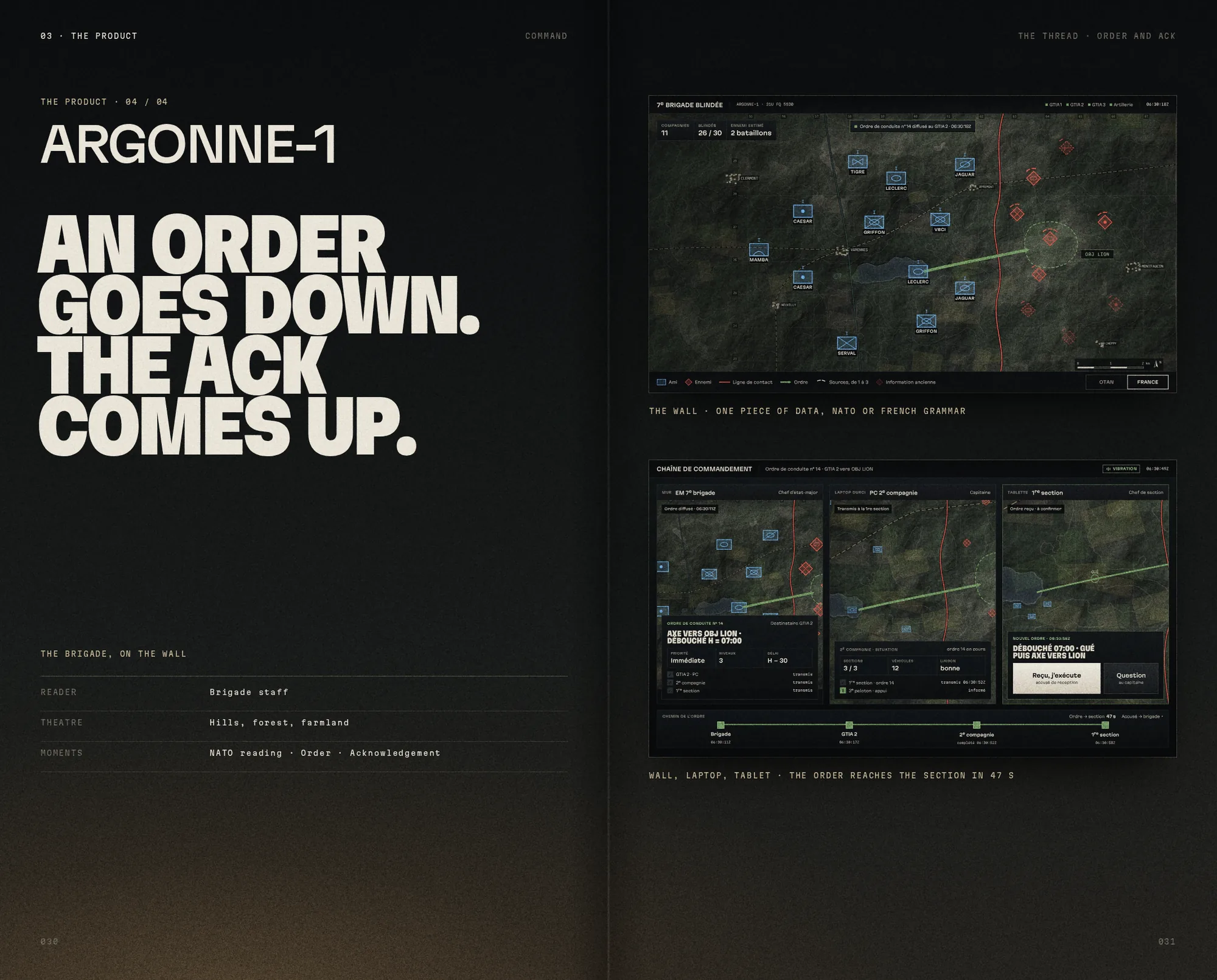
The same order crosses three screens. The brigade draws it on the wall. The captain receives it on the laptop and completes it for his section instead of copying it. The section leader's tablet vibrates, and one target is enough to acknowledge.
The acknowledgement climbs back the other way, and the wall shows who received it, and when, at every level. From the wall to the tablet, 47 seconds. Nobody had to ask whether it was received.
How the interface works
- 01Danger is felt before it is read
- 02The machine proposes, a human decides
- 03An order reads at a glance
- 04Every symbol says where it comes from
- 05The sign is a tool
- 06One meaning per colour
- 07Night is a mode, not a theme
- 08Targets for gloves
Two basemaps
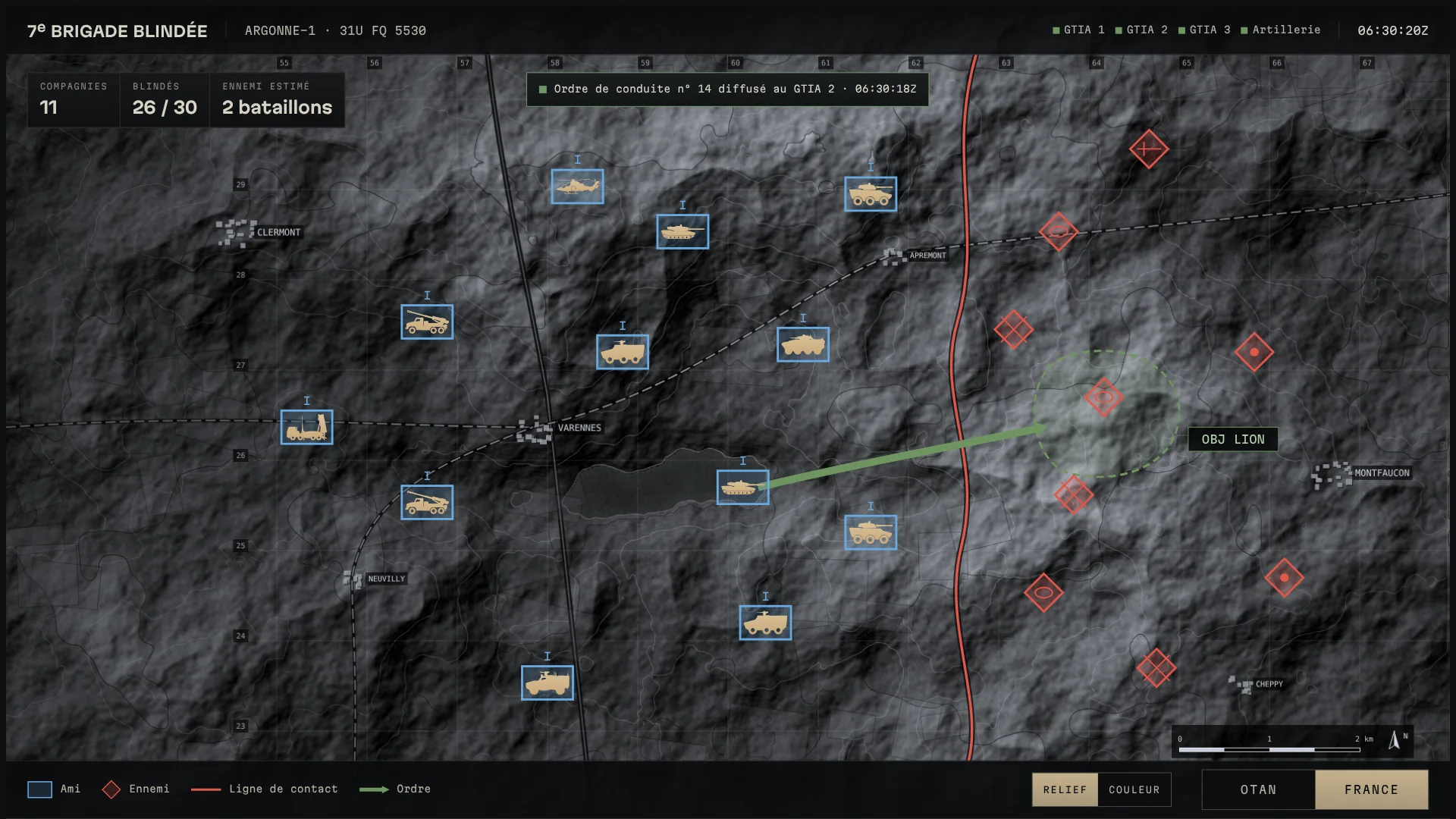
Tactical relief, or colour map.
Hardware
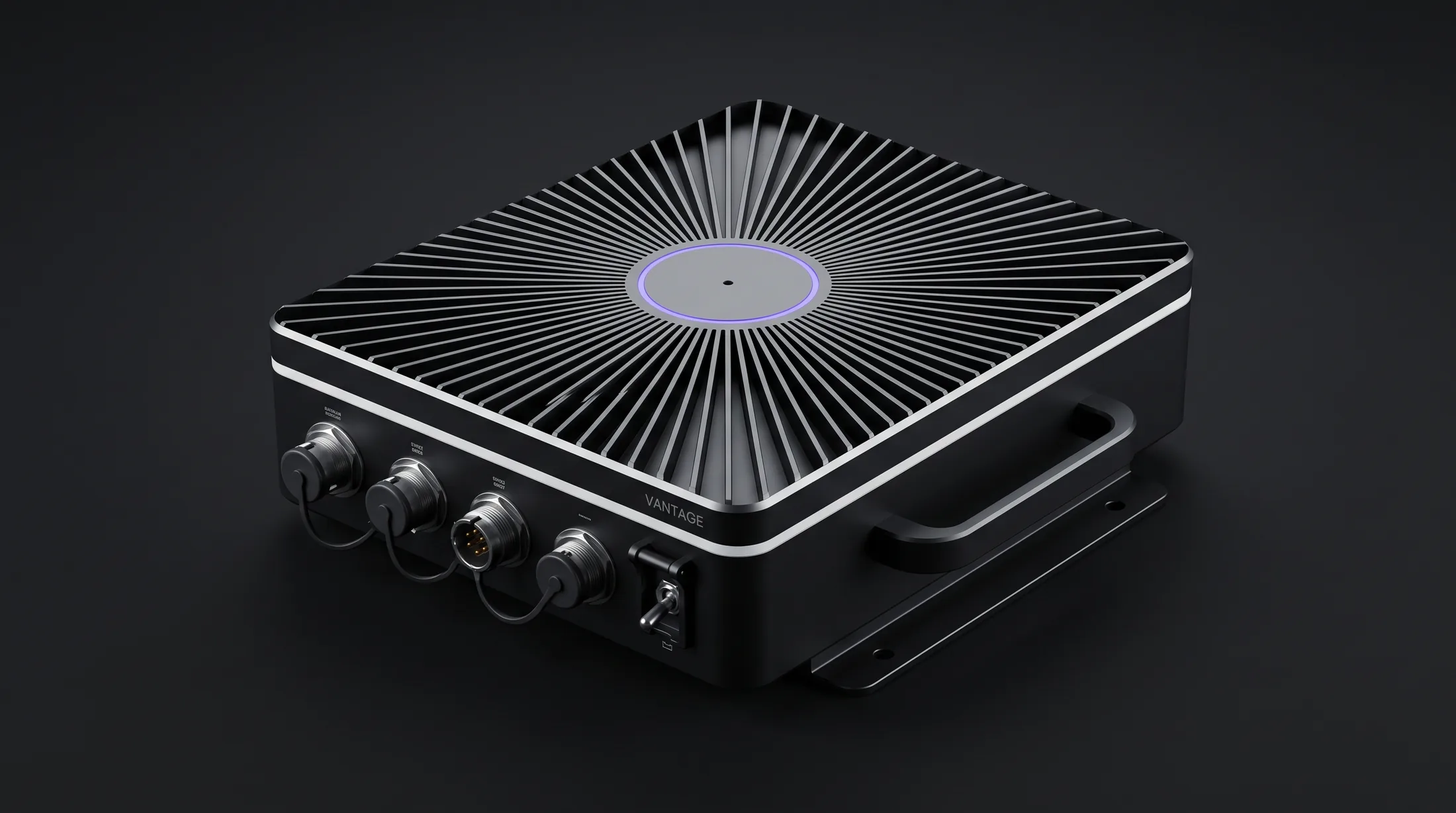
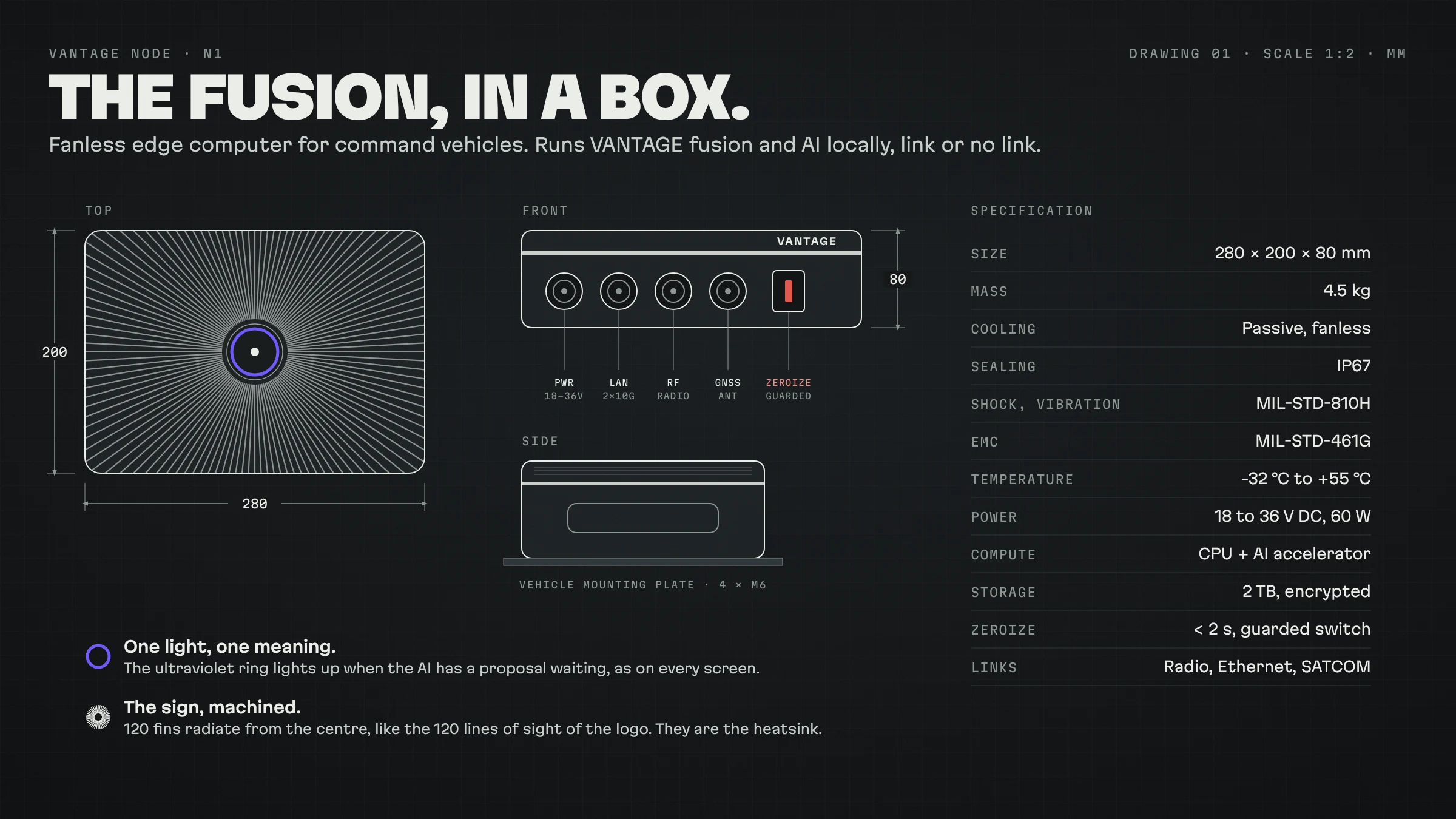
VANTAGE Node. The fusion, in a box.
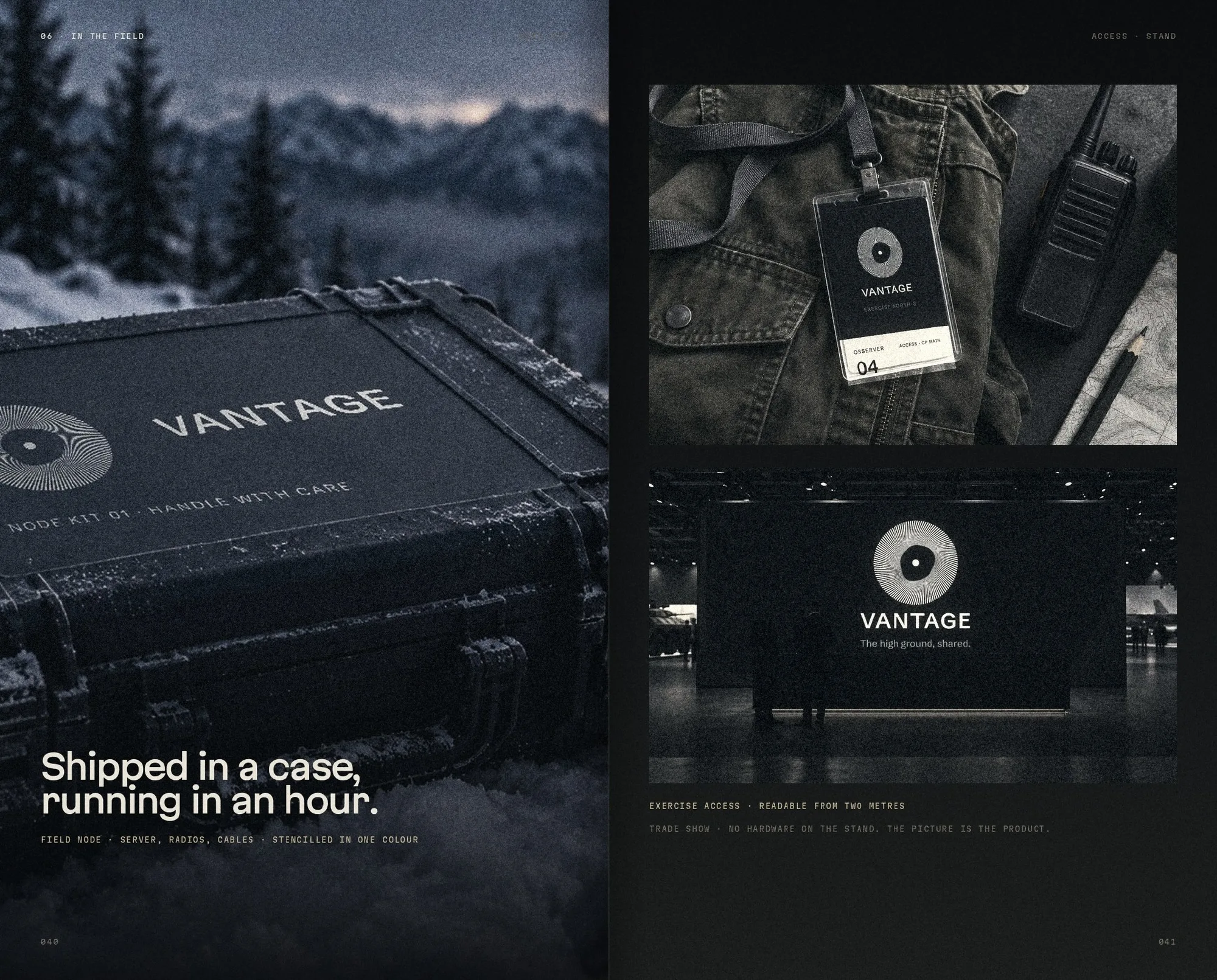
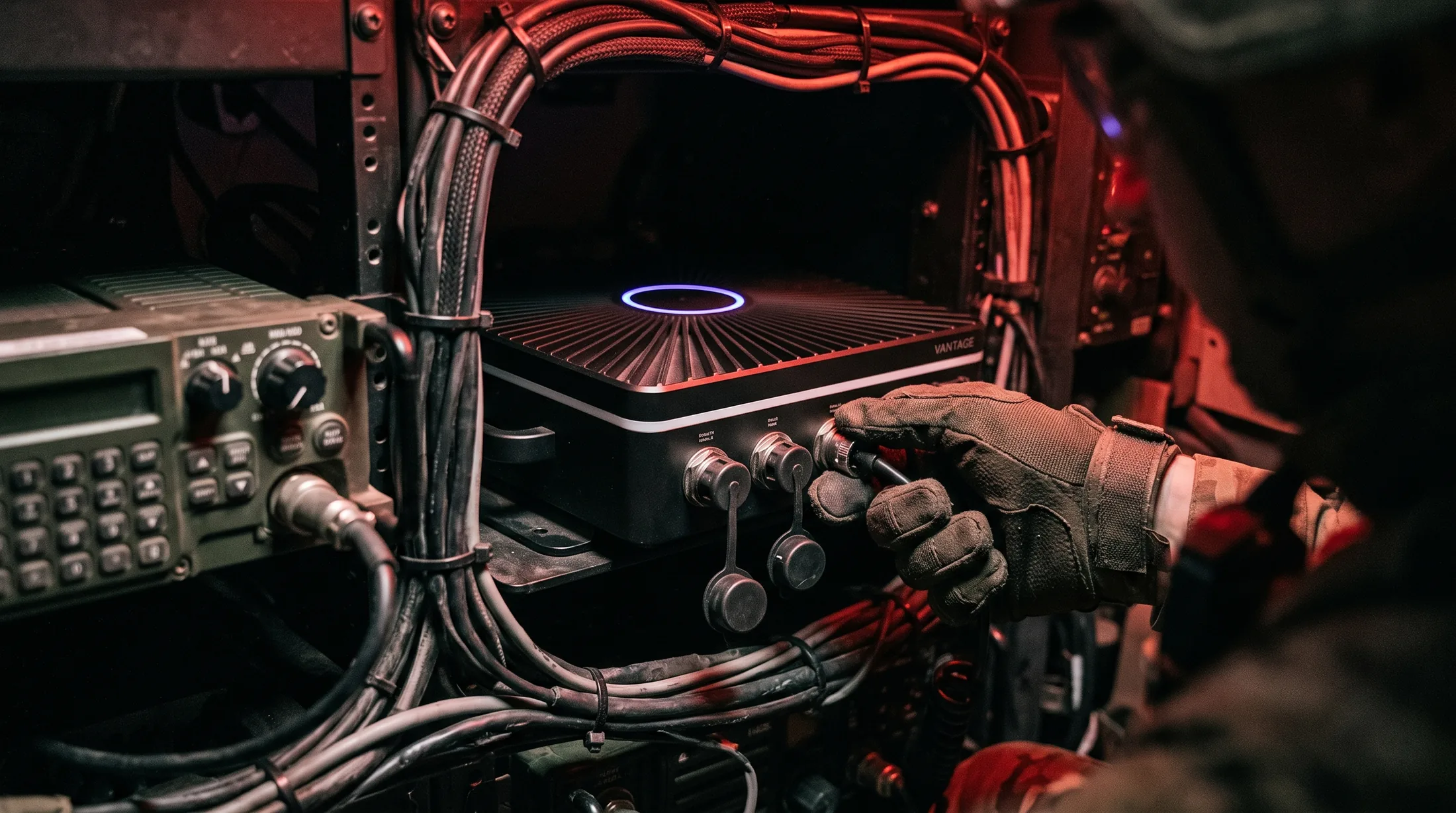
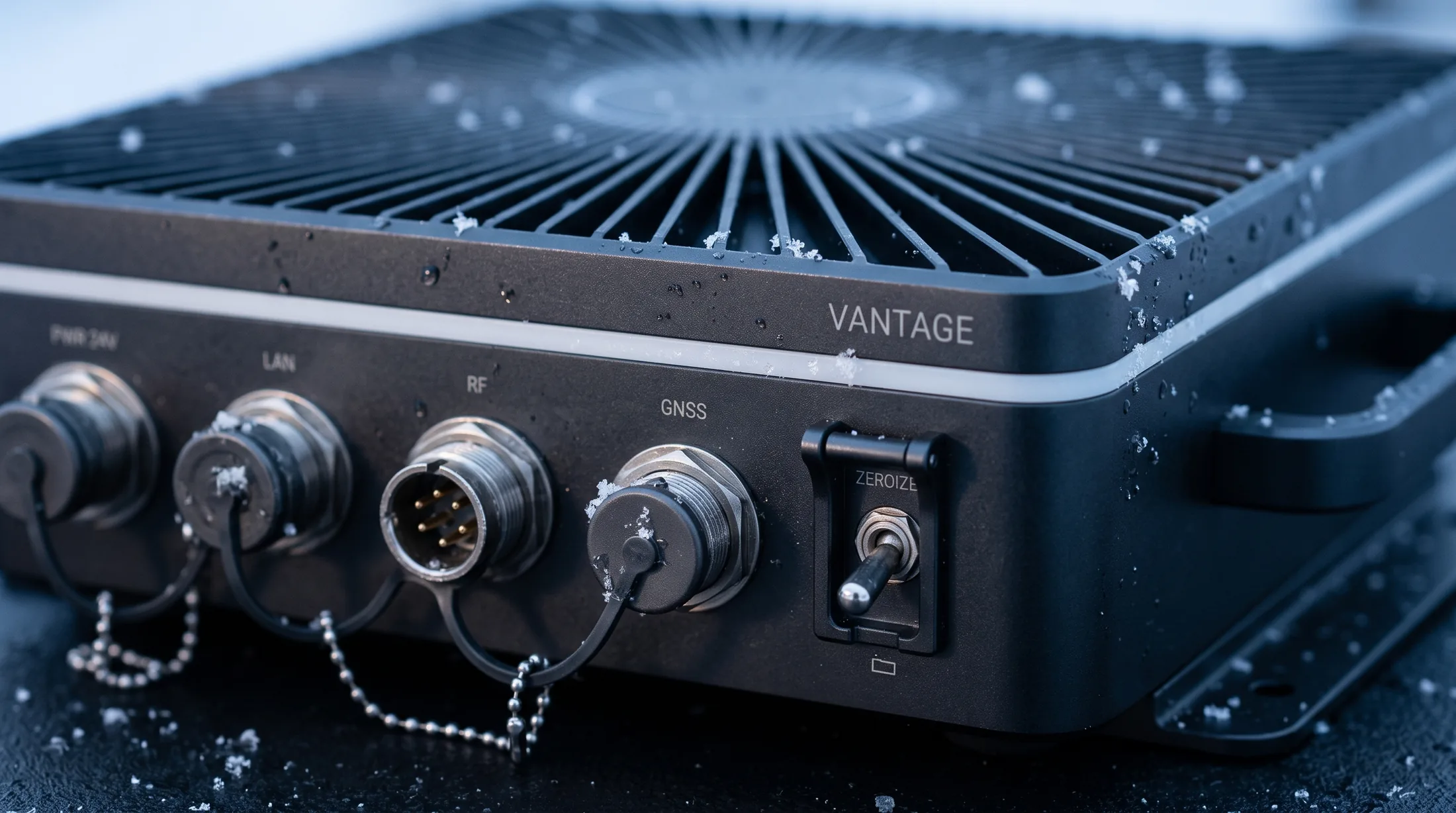
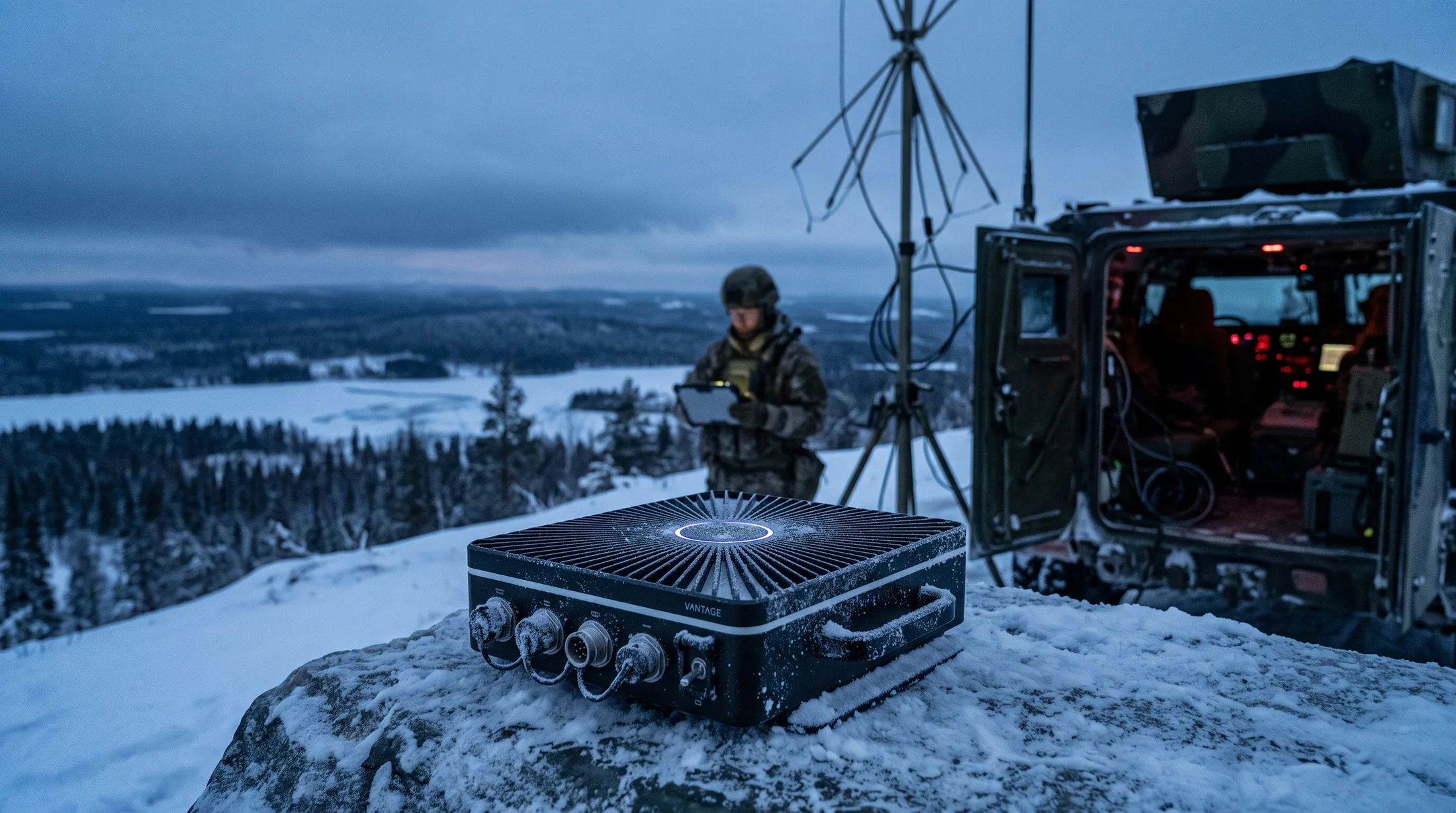
VANTAGE runs on the rugged tablets, laptops and screens units already have. When a unit has nothing, the Node is the reference: a fanless edge computer bolted in the command vehicle, that runs the fusion and the AI locally, link or no link.
The top face is the heatsink, and it is the sign: 120 machined fins radiate from the centre like the lines of sight of the logo. One light only, a ring that comes on when the AI has a proposal waiting.
Software
Each echelon keeps its own copy of the picture.
Degraded by design
Every level keeps a full copy of its own picture and carries on alone when the link drops, as in SAND-7. Messages wait in a queue and leave when the link comes back. NATO symbology is native; the national register sits on top as a second grammar, never as a fork of the data.